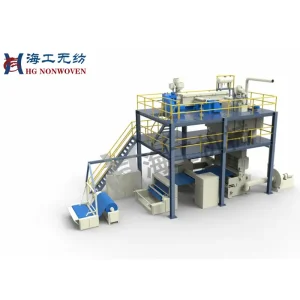
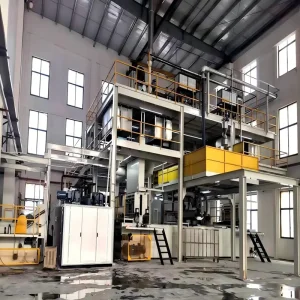
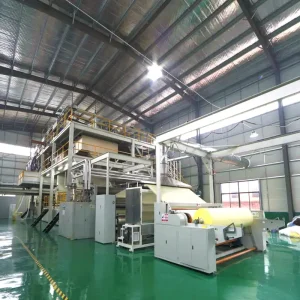
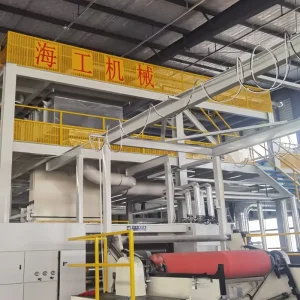
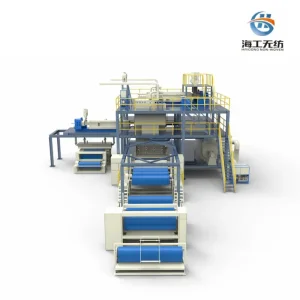
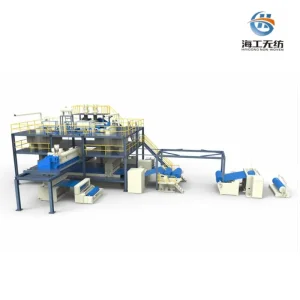
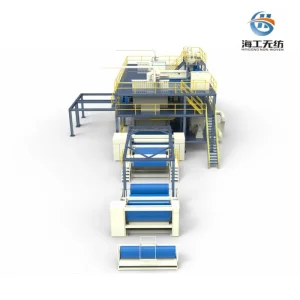
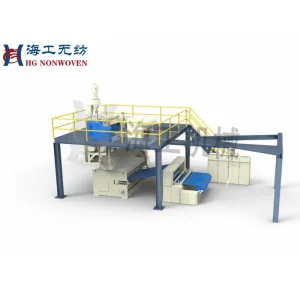
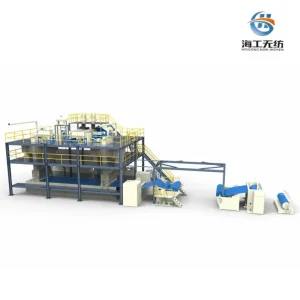
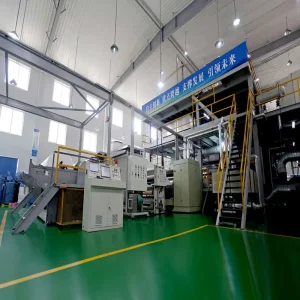
Explore our state-of-the-art nonwoven roll processing equipment engineered for optimal tension control, high throughput, and seamless slitting capabilities.
In the downstream production of spunbond, meltblown, and composite nonwoven lines, the winding machine stands as a vital mechanical unit determining roll structure, surface tension, and conversion capability.
A high-quality nonwoven roll must be wound under strict tension profiling. Standard materials such as PP spunbond, SMS, and laminated fabrics are prone to web necking, wrinkles, and fiber distortion if tension is not dynamically regulated. Our machinery employs closed-loop pneumatic feedback controls coupled with high-sensitivity load cells to maintain perfect web stability during winding.
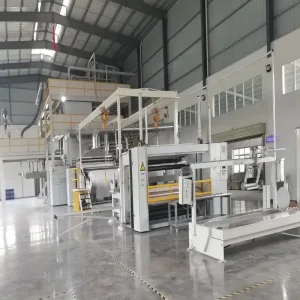
Whether utilizing surface winders, center winders, or high-performance automatic turret winders with fly-splicing capabilities, our engineered winding units deliver uniform roll density, clean slit edges, and continuous reliability for global high-speed plants.
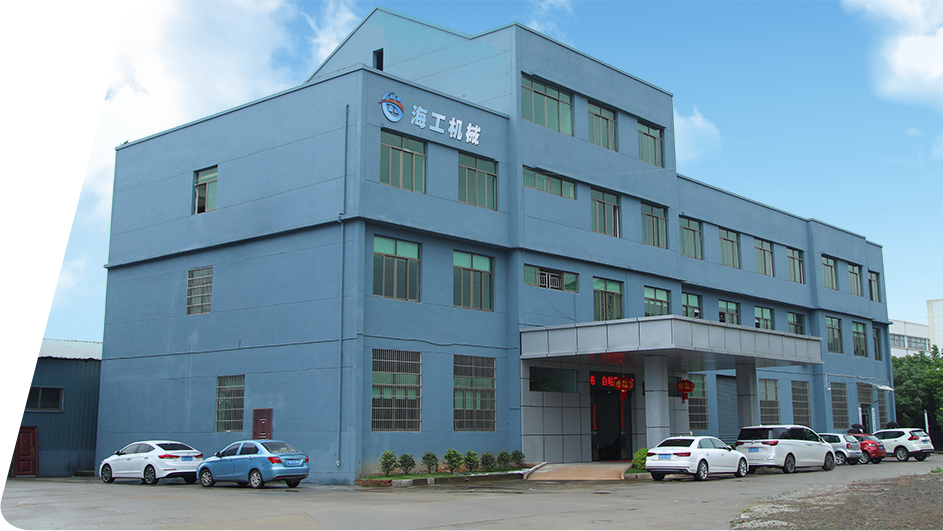
Pujiang HG Nonwoven Machinery has been a respected, pioneer manufacturer of PP spunbond and meltblown nonwoven fabric production lines since 2014, drawing on over 20 years of cumulative engineering experience.
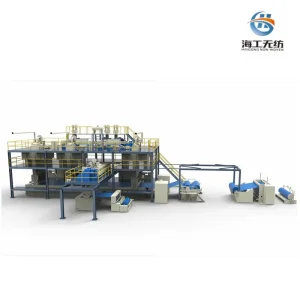
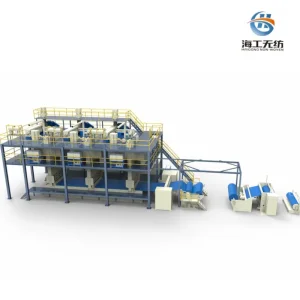
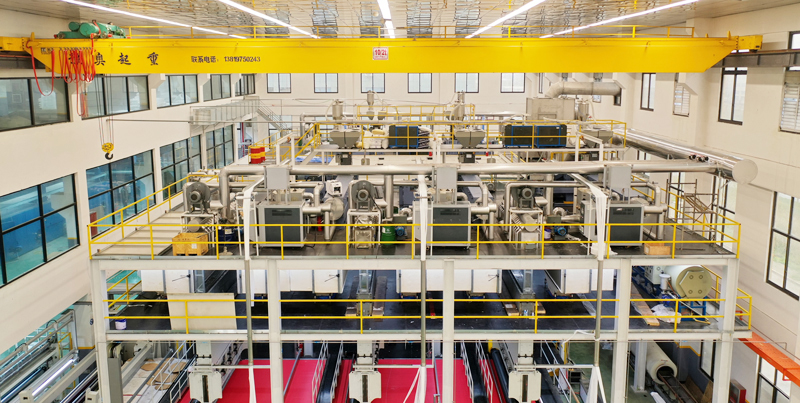
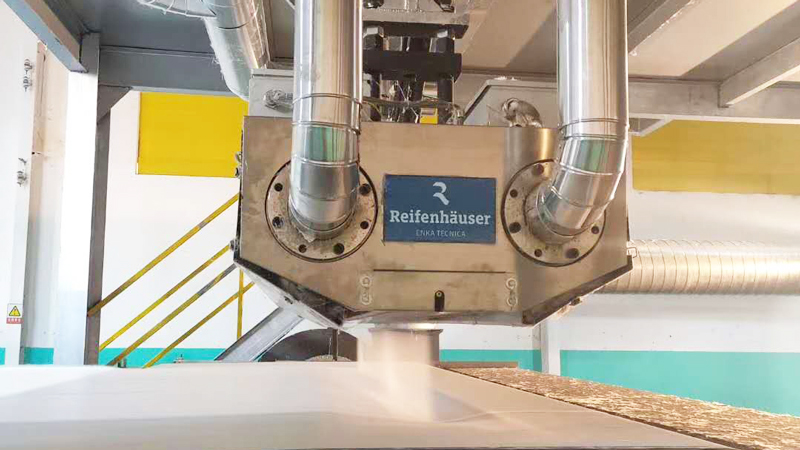
We design and build complete, turnkey spunbond and composite nonwoven plants. By introducing overseas 5th Generation spunbond spinning technology and optimizing it with our proprietary engineering innovations, we have reduced overall energy footprints, minimized machine installation space, and improved system ease of operation.
Our systems focus heavily on structural stability, lower raw material waste, and the production of highly uniform, eco-friendly, and biodegradable spunbonded fabrics. From melt extrusion to the final slitting, rewinding, and recycling stages, HG Machinery delivers total engineering excellence.
Every end-use application requires specific properties regarding fiber diameter, tensile strength, barrier performance, and flexibility. Discover how our winding and manufacturing lines serve diverse global markets.

Nonwoven fabric is essential in the hygiene sector, offering breathability, softness, and excellent fluid management for comfort and protection. It quickly absorbs liquid and keeps it away from the skin, making it ideal for paper diapers, incontinence pads, and feminine hygiene products.

Used extensively in the medical field and for protection against biological agents. Delivering critical safety properties, such as infection prevention, they are essential for surgical gowns, face masks, bed sheets, and surgical towels, ensuring effective filtration, protection, and comfort.
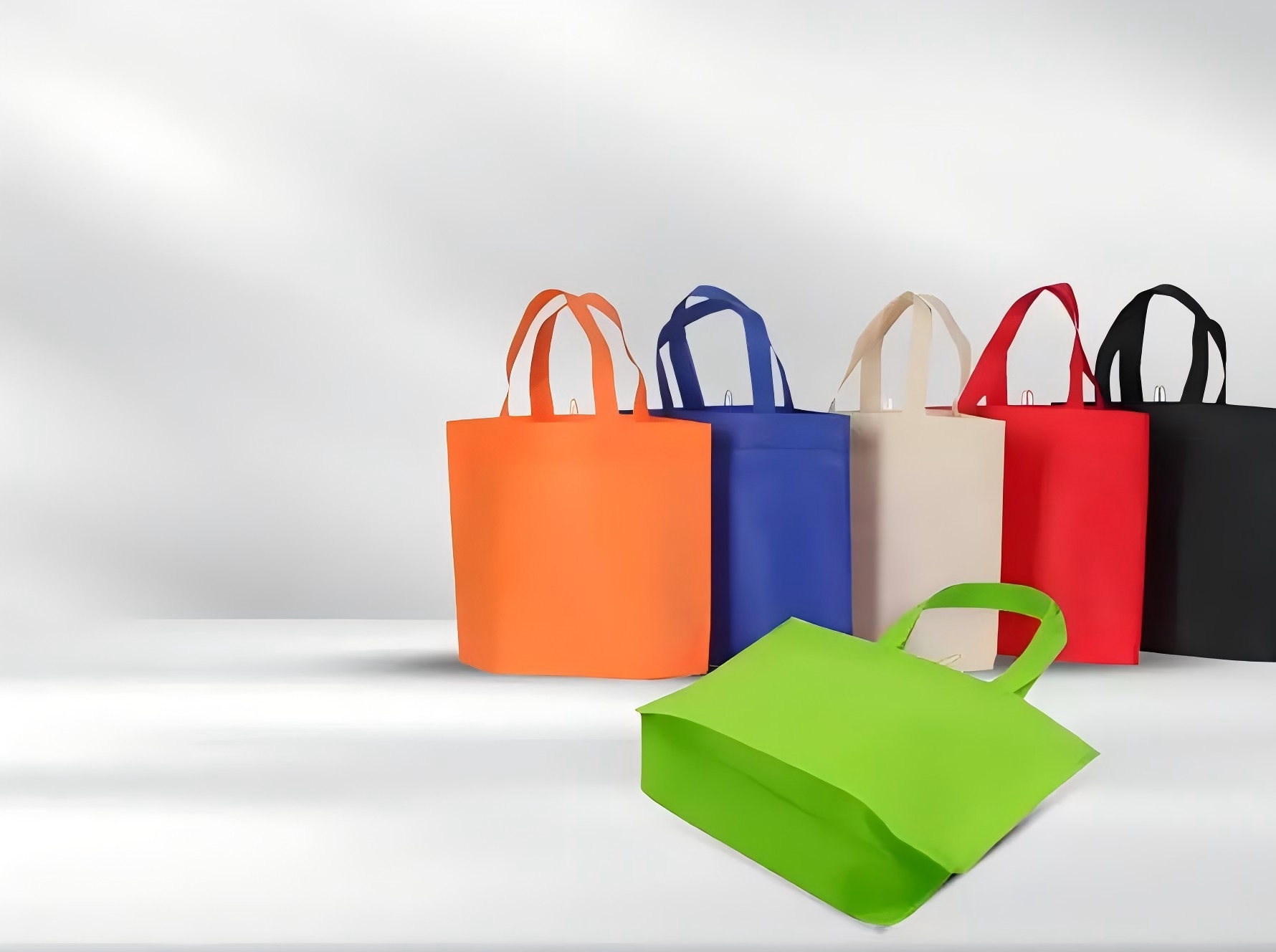
Ideal for packaging applications due to lightweight design, energy-efficient logistics, robustness, and re-usability. Widely chosen for shopping bags, fruit bags, garment bags, rice bags, pocket springs, garment interlining, and pharmaceutical packaging.
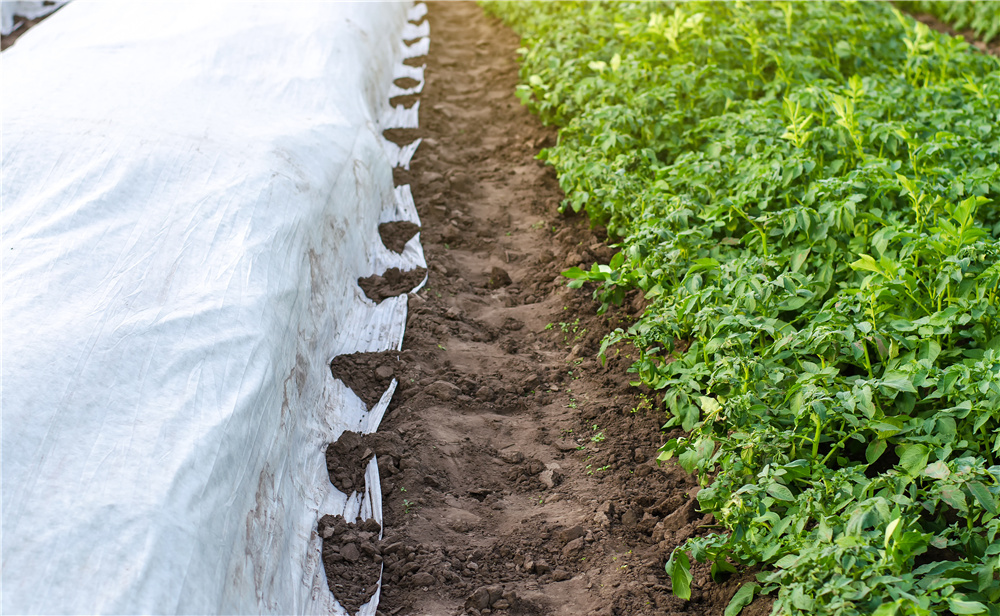
Allows air and water to pass through while protecting against frost, wind, and pests. Nonwoven materials regulate heat, act as UV blockers, and provide superior microclimatic air and water permeability, helping to enhance crop yield and overall crop health.
Purchasing nonwoven production assets requires careful evaluation of ROI, local energy costs, space layout, and product consistency. Here is how HG supports your decision-making process.
Entering the nonwoven manufacturing industry requires an evaluation of regional feedstock costs, supply chains, and consumer demands. HG Machinery leverages decades of technical insights to provide thoroughly researched project feasibility reports. We analyze regional demand curves, utility costs, and roll requirements to customize configuration specifications for optimized ROI.
Electrical consumption represents the primary operating cost (OpEx) for spunbond and meltblown lines. HG's 5th generation spinning systems are engineered to achieve high-efficiency polymer drawing while minimizing fan power consumption. Our winding units are equipped with low-inertia direct-drive motors, reducing power usage by up to 15% compared to conventional chain-driven systems.
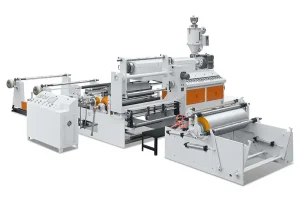
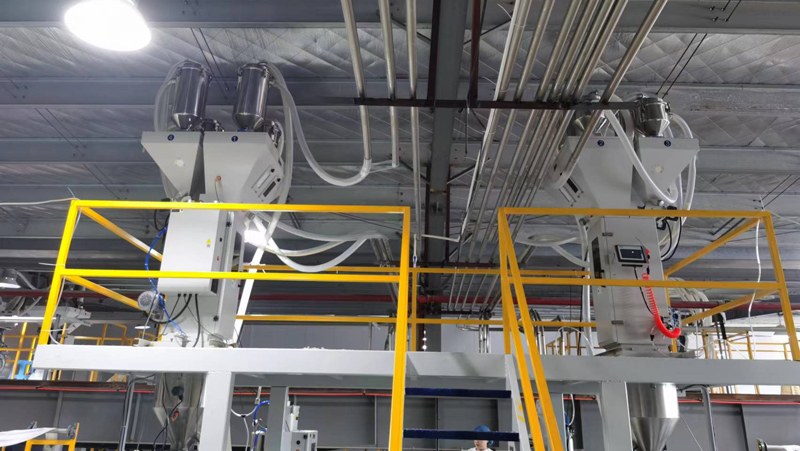
We eliminate production integration risks by managing the entire engineering lifecycle. Besides manufacturing the central PP spunbond line, we deliver and integrate auxiliary units: polypropylene recycling machinery, inline high-speed slitting machines, flexo printing presses, and laminating modules. Every component connects to a unified control panel for streamlined operation.
Discover the mechanical specifications of our most in-demand spunbond and composite (SMS) machinery lines, engineered for continuous operation.
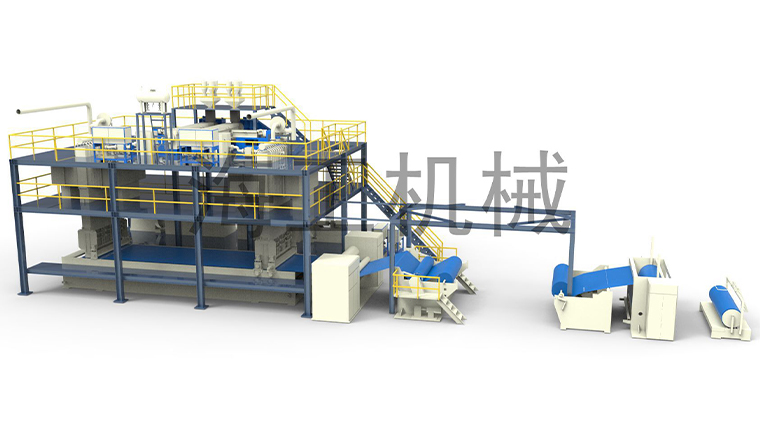
Designed for single-beam (S) or double-beam (SS) high-yield configurations. It produces lightweight, high-tensile nonwovens suitable for eco-friendly shopping bags, agricultural crop protection covers, and furniture dust covers. Excellent tensile values across MD and CD orientations.
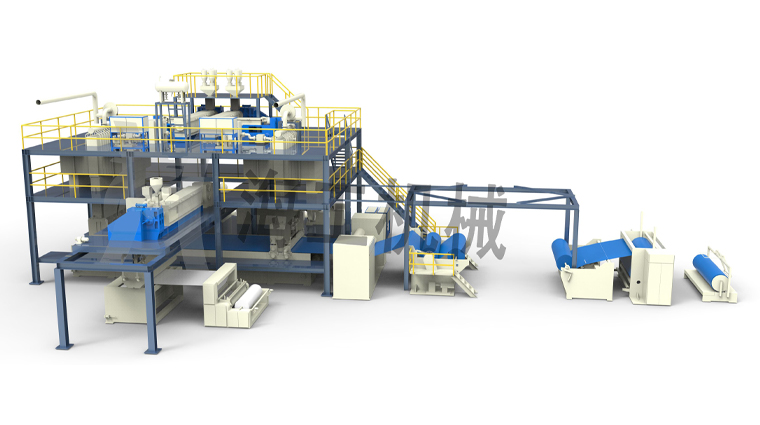
Combines spunbond structural filaments with meltblown microfibers for reliable fluid and particulate barrier performance. This machine is ideal for medical sterilizing wraps, surgical drapes, masks, protective suits, and heavy-duty hygiene products.
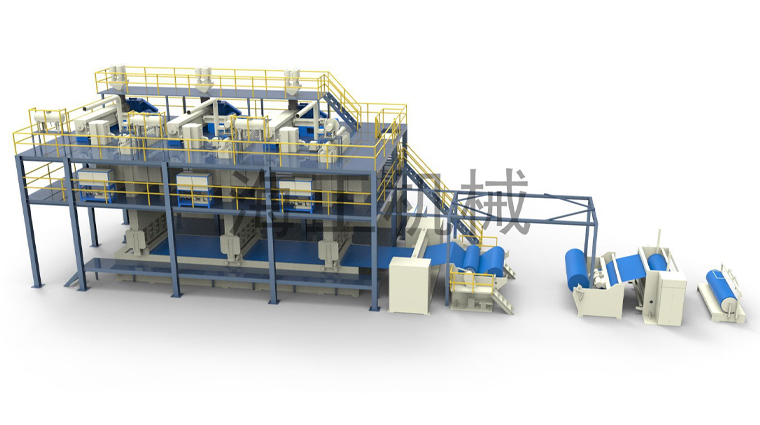
Integrates four structural laydown layers (Spunbond, Meltblown, Meltblown, Spunbond) to yield superior filtration metrics and hydrostatic head resistance. Preferred by medical supply converters for premium drape and gown manufacturing.
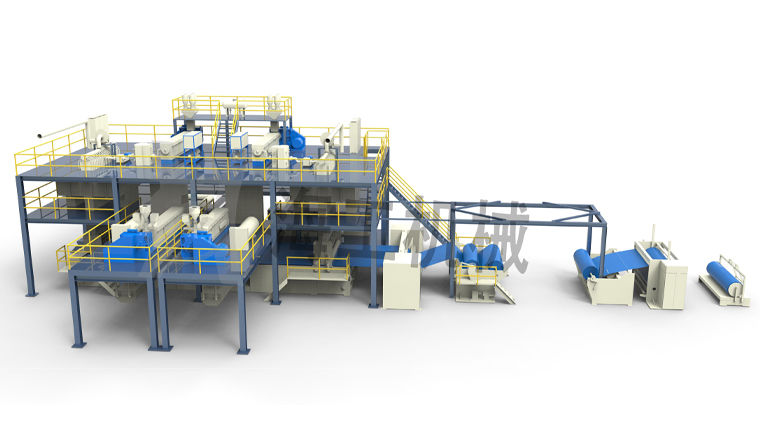
Engineered for medical and hygienic fabric applications requiring breathability, barrier protection, and soft, cloth-like feel. Advanced filament attenuation produces ultra-fine denier webs with minimal mass variation.
As global markets shift towards carbon neutrality and waste reductions, the nonwoven industry is undergoing a sustainability transition. We are leading the integration of green technologies within high-speed extrusion lines.
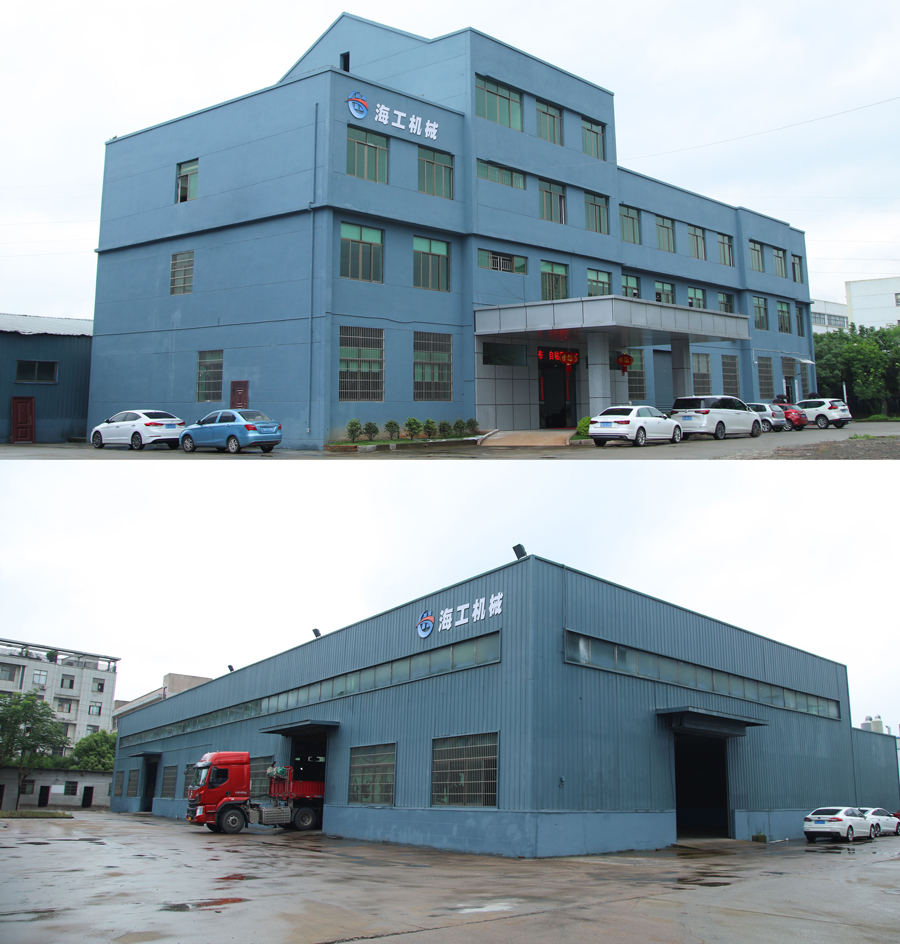
Deploying a complex spunbond production line requires robust service engineering. HG Machinery provides dedicated support throughout planning, installation, and daily operations.
Key technical inquiries answered by our application engineers to assist your procurement process.
Nonwoven fabrics (especially lightweight PP spunbond and meltblown webs) are sensitive to tensile pull. If the winding tension is too high, the web will stretch and suffer from necking, causing density variations across the roll. If it is too loose, the roll will suffer from telescoping and creasing, making downstream converting (in diaper or mask factories) difficult. Our winding units utilize dynamic tension profiling to automatically decrease tension as the roll diameter increases.
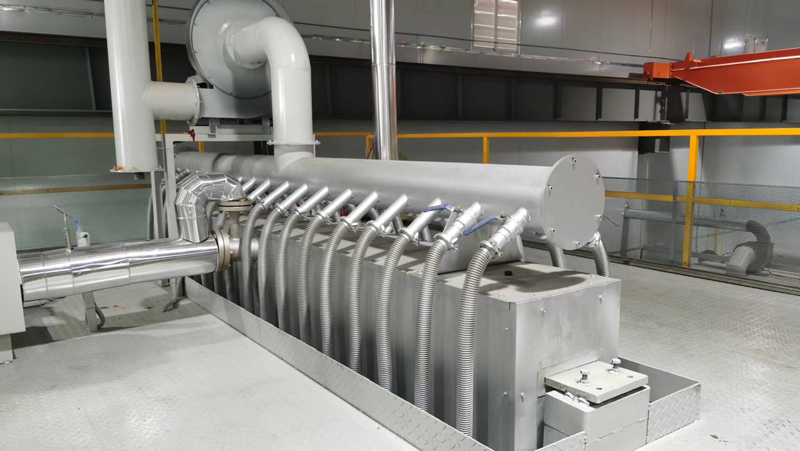
Our 5th Generation design optimizes the drawing channel aerodynamics. By utilizing high-velocity, temperature-controlled air currents in a narrower drawing slot, we achieve the desired filament attenuation at lower pressure requirements. This reduces the total power draw of the suction and cooling fans by up to 15-20% compared to legacy 3rd and 4th generation designs.
HG Machinery offers both solutions. Our production lines feature high-speed inline slitting configurations that cut the web to custom widths before winding onto pneumatic shafts. For complex converters who require narrow baby rolls or multi-pattern printed rolls, we recommend our standalone, high-performance slitting and rewinding machines, which are available as part of our turnkey packages.
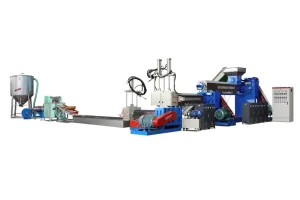
We supply highly efficient polypropylene plastic recycling machines. During the inline slitting process, the trimmed edges are continuously drawn away by venturi air systems, fed into a shredder-extruder, and pelletized. These recycled PP granules can then be safely blended back with virgin PP raw materials, creating a zero-waste loop and boosting overall project profitability.
Manufacturing a full turnkey PP spunbond or composite SMS line takes approximately 90 to 120 days depending on the machine width and beam count. Installation, calibration, and training on-site take another 30 to 45 days. We provide a complete 24-month comprehensive engineering warranty along with lifetime remote digital support and on-site engineering maintenance services.
Select from our verified range of manufacturing, recycling, and composite nonwoven machinery lines configured for global export.
 HG NONWOVEN