Explore our premium machinery lines engineered for unparalleled throughput consistency, energy-saving configurations, and long-term durability.
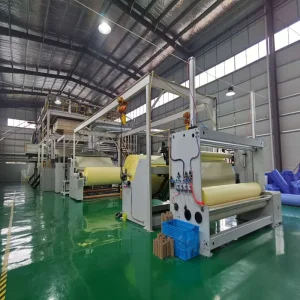
Fully integrated PP spunbond nonwoven manufacturing system designed to deliver continuous high-tensile fabric with comprehensive A-to-Z turnkey installation support.
View Technical Specs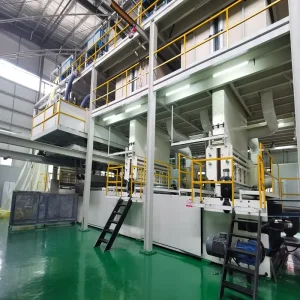
The specialized HG-1600SS double-beam line optimized for light-to-heavy fabric weights, offering superior web uniformity and cross-directional tensile balance.
View Technical Specs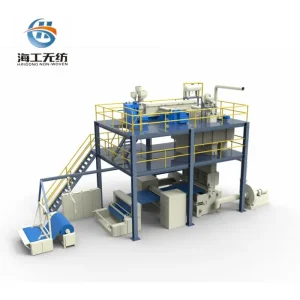
Advanced TNT spunbond systems focusing on maximum extrusion yield, optimized drawing speeds, and uniform fabric hand-feel for medical and packaging lines.
View Technical Specs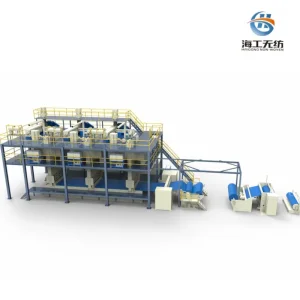
Precision-engineered PP spunbond lines integrating the latest PLC control networks for seamless fiber extrusion, cooling, and thermo-bonding processes.
View Technical Specs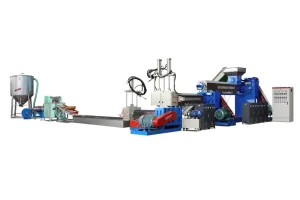
Heavy-duty recycling systems that allow manufacturers to process edge trim and factory waste directly back into production-ready PP granules.
View Technical Specs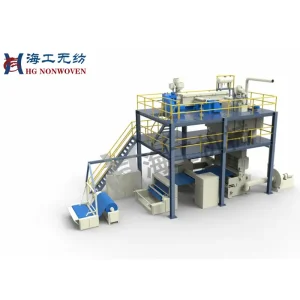
Industrial-scale spunbond line providing balanced polymer distribution, minimal thermal degradation, and energy-efficient motor configurations.
View Technical Specs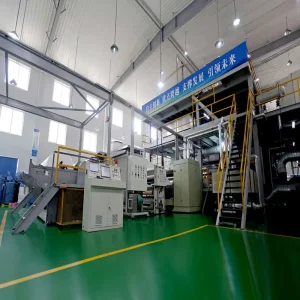
End-to-end spunbond line incorporating advanced air quenching, high-speed drawing systems, and state-of-the-art calendering units.
View Technical Specs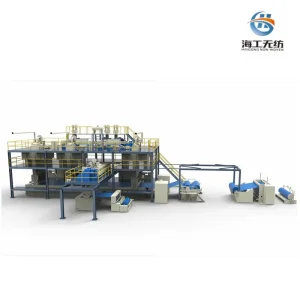
Reliable high-output machine tailored for packaging and industrial applications. Built to run stably under continuous, high-speed workloads.
View Technical SpecsPujiang HG Nonwoven Machinery has been a well-known nonwoven fabric making machine manufacturer since 2014. We specialize in manufacturing PP spunbond, meltblown, and composite nonwoven fabric making machines with complete, industry-leading turnkey engineering services. By integrating overseas advanced design concepts—specifically our 5th Generation spunbond spinning technology—with our own autonomous engineering developments, we provide lines characterized by convenient operation, compact footprint, low power consumption, high efficiency, and minimal production cost.
Our corporate philosophy regards "high quality, good service" as our guiding tenet. By choosing HG Nonwoven Machinery, you gain a reliable partner committed to helping you stand out in a competitive global market. Contact us today to learn more about how to produce nonwoven fabrics economically, reliably, and sustainably.
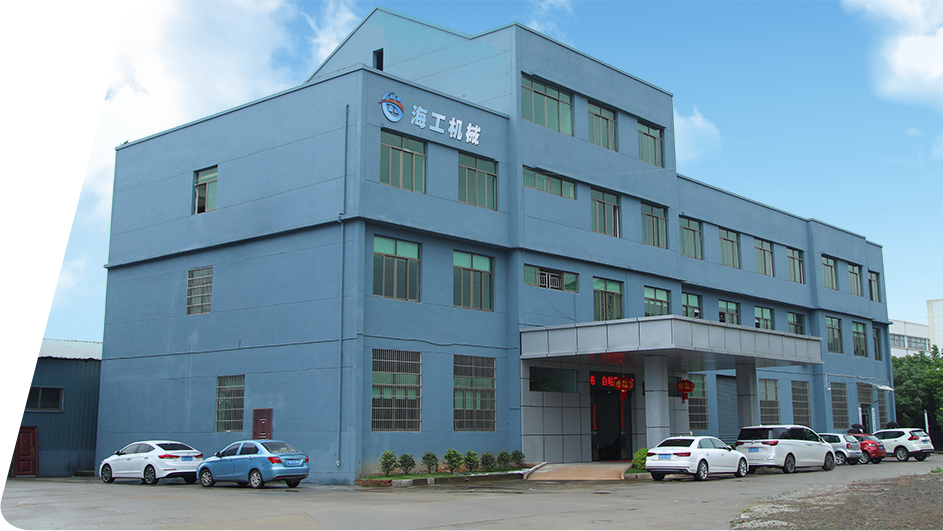
Deep-dive analysis of industry trends, technological roadmaps, and the thermodynamics of high-speed spunbond & meltblown extrusion.
The global nonwoven industry is transitioning away from single-beam (S) systems toward complex, multi-beam composite configurations. Combining spunbond's tensile strength with meltblown's barrier performance (SMS, SMMS, SSMMS) allows manufacturers to address the highly demanding medical and hygiene sectors. Our 5th Generation technology integrates these configurations seamlessly, maintaining low energy consumption while achieving high filtration efficiency.
Operating expenses, particularly electricity and heating, represent the highest share of the Total Cost of Ownership (TCO) in nonwoven production. Our lines feature energy-recovery heating systems, high-efficiency AC motors controlled by ABB/Siemens frequency inverters, and optimized heating profiles to decrease energy consumption per ton of finished fabric by up to 15-20% compared to legacy systems.
With international directives shifting toward green and biodegradable materials, our extrusion screws and spinneret systems are engineered to run polylactic acid (PLA), polybutylene adipate terephthalate (PBAT), and recycled polypropylene. Precise temperature control zones prevent polymer degradation, ensuring uniform fiber diameter even when using eco-friendly polymers.
HG's 5th Generation spunbond technology uses a narrow-slit slot attenuator coupled with a high-pressure air distribution system. Filaments are accelerated to near-supersonic drawing speeds, forcing the polymer chains to align and crystallize perfectly. This results in incredibly thin filaments (1.5 - 2.0 denier) with high tensile strength in both machine (MD) and cross directions (CD).
With deep expertise across diverse sectors like packaging, medical, hygiene, and agriculture, we guide you to choose the most suitable production line.

Nonwoven fabric is essential in the hygiene sector, offering breathability, softness, and excellent fluid management for comfort and protection. It quickly absorbs liquid and keeps it away from the skin, making it ideal for paper diapers, incontinence pads, and feminine hygiene products.

Nonwovens fabrics are extensively used in the medical field and in protection against biological agents in other sectors. They deliver critical safety properties, such as prevention against infections and diseases. They are essential for making face masks, surgical gowns, bed sheets, and surgical towels, ensuring effective filtration, protection, and comfort.

Nonwoven fabric is ideal for a variety of packaging end-uses, as their exceptional lightweight, their energy-efficient production, shipping and storage, and their long life and robustness allow for two important features: volume reduction and re-usability. It widely used for shopping bags, fruit bags, garment bags, rice bags, pocket springs, garment interlining, as well as packaging for pharmaceuticals and cosmetics, among other applications. Its versatility and long lifespan contribute to its popularity in various industries.
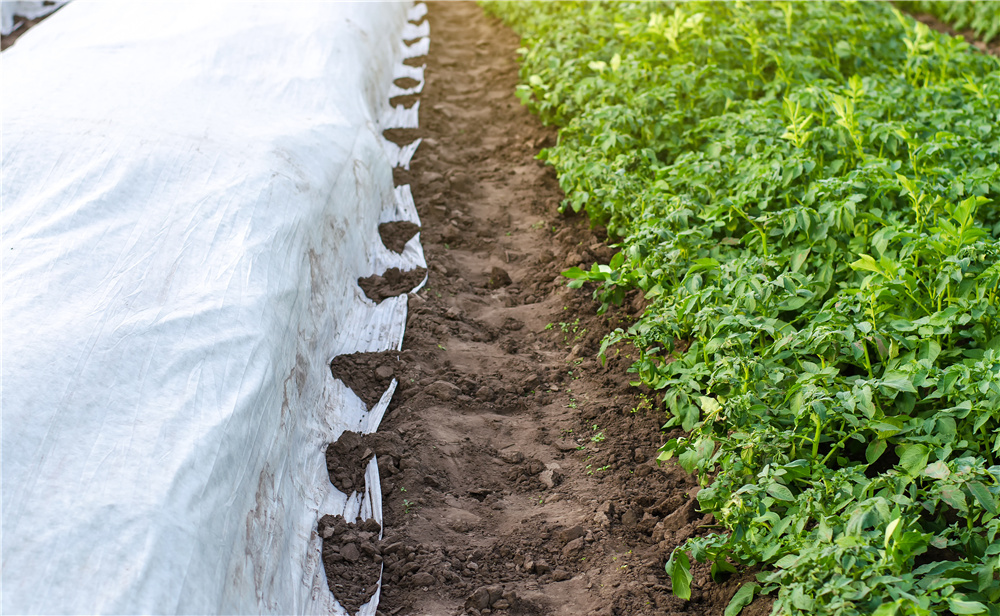
Agriculture Non Woven Fabric allow air and water to pass through while providing wind and cold protection by generating a microclimate around the crop. Furthermore, because nonwoven works as a physical protection media, it can assist prevent damage to crops, vegetables, and seeds from insects and birds. Nonwoven materials can assist regulate heat, UV blocker agriculture, while also providing superior air and water permeability. These materials are light weight, portable, and may be tailored to match specific needs and provide specific services.
Discover our most popular industrial configurations trusted by leading nonwoven manufacturers worldwide.
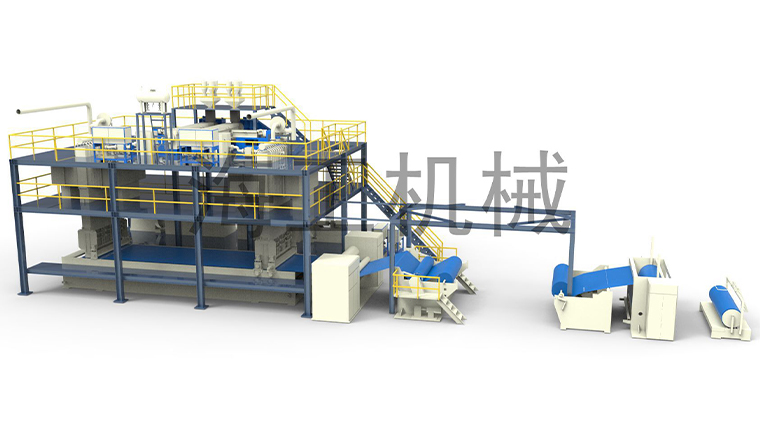
Perfect for manufacturing packaging nonwoven bags, furniture uses, and agricultural protective sheets with low capital expenditure.
View Details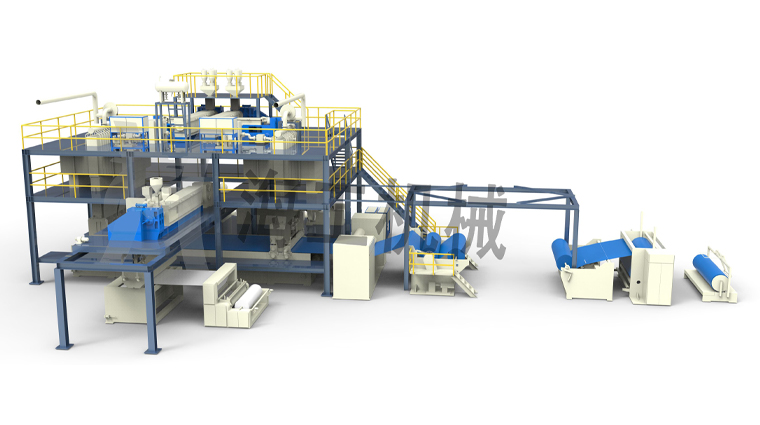
Advanced composite barrier production line primarily configured for medical disposables, surgical drapes, and high-hygiene applications.
View Details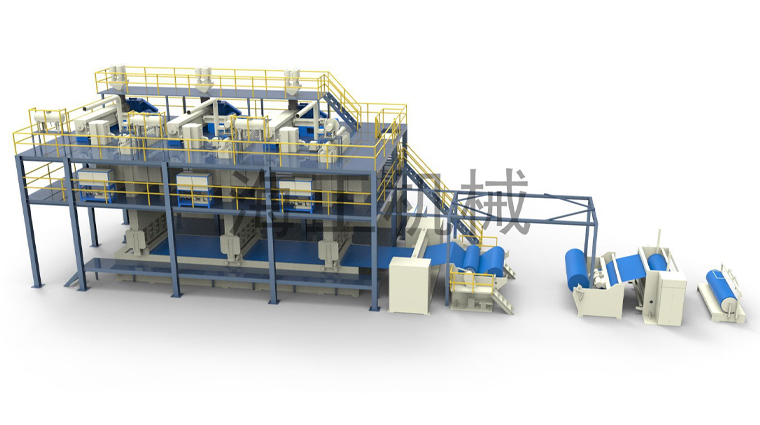
Featuring 4 layers (Spunbond-Meltblown-Meltblown-Spunbond) to offer significantly higher filtration efficiency and liquid resistance than basic SMS fabric.
View Details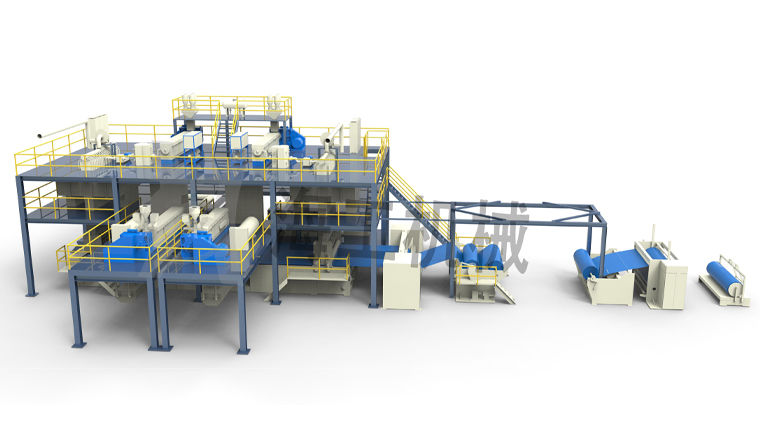
Ultimate performance configuration offering excellent barrier protection, extreme softness, and enhanced drape comfort for advanced medical products.
View DetailsTo minimize commissioning risks, maximize plant floor coordination, and speed up market launch times, HG Nonwoven Machinery offers comprehensive, single-source project integration from A to Z. Sourcing individual equipment components from separate manufacturers often leads to misaligned control systems, differing line heights, and uneven production speeds.
Our machines are meticulously designed and incorporate the latest technology to ensure maximum production efficiency with minimal energy consumption. We also offer customized solutions to ensure our machines align perfectly with your unique needs.
Leveraging decades of industry-specific data, we provide prospective clients with detailed local market analyses, operating cost models, and return-on-investment (ROI) calculations to assist in drafting project feasibility reports.
Besides the core PP nonwoven fabric making machines, we provide a complete suite of auxiliary machinery, including plastic recycling machines, fabric slitting machines, flexo printing units, lamination lines, and bag making machines.
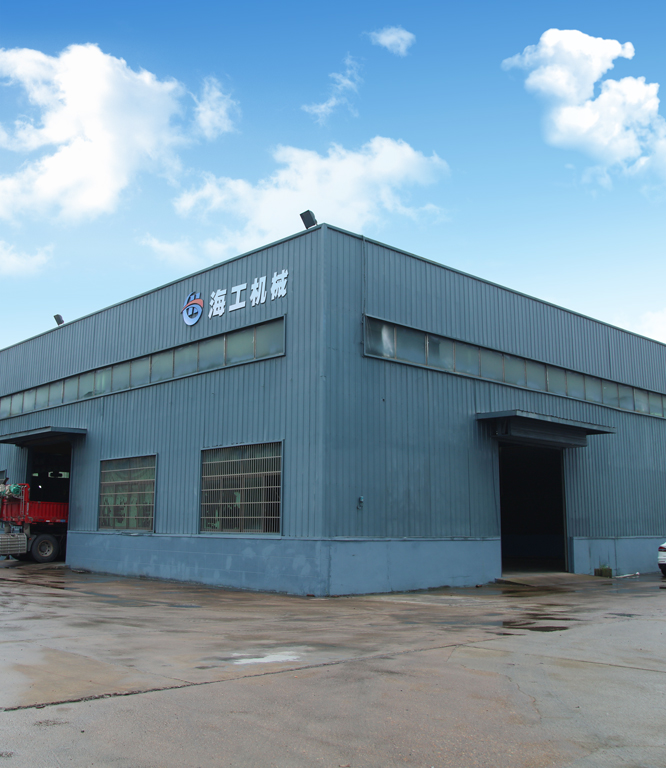
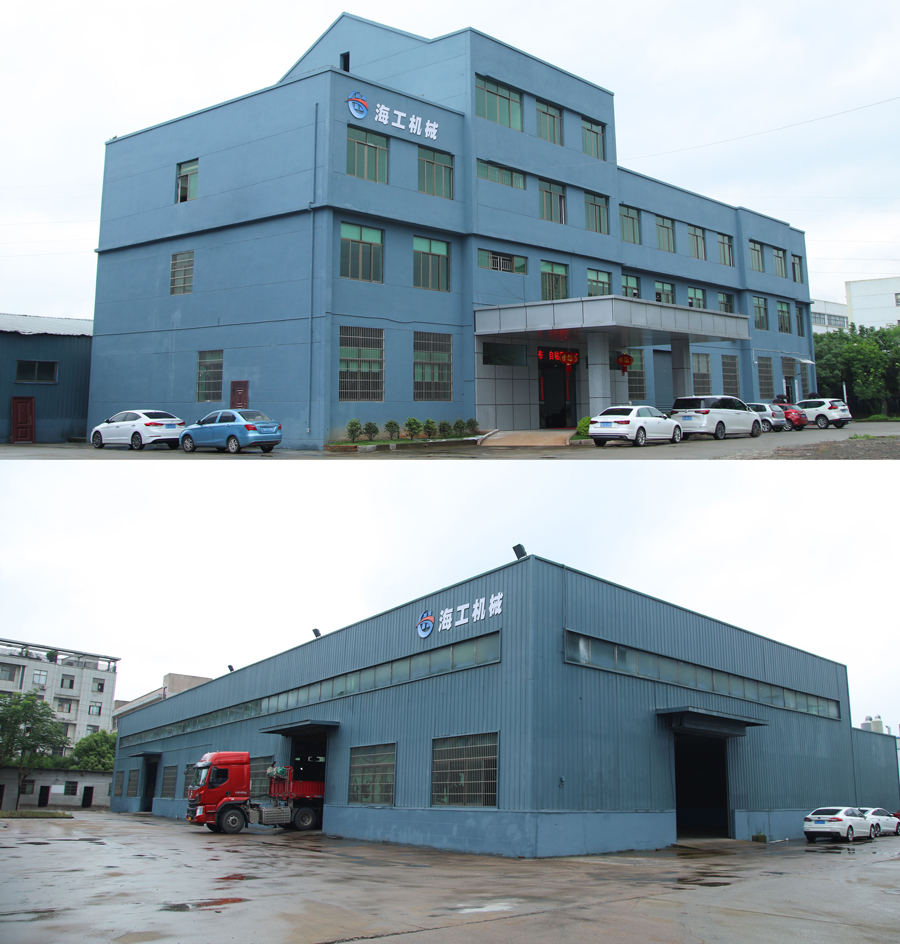
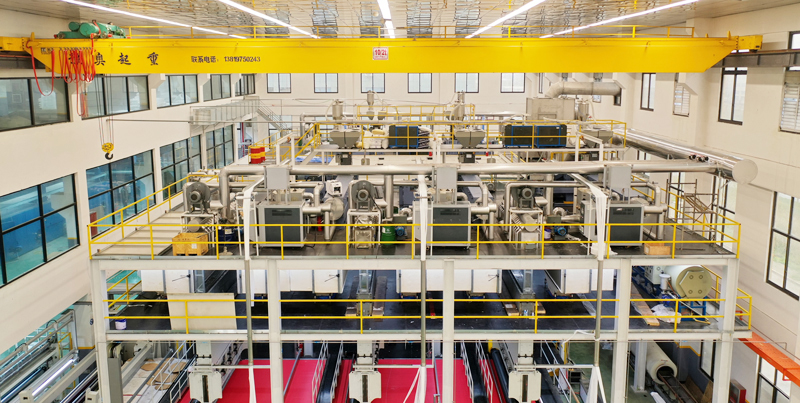
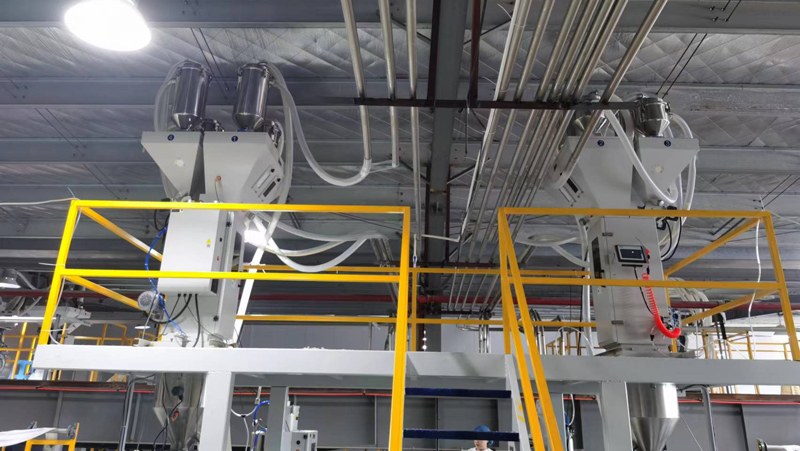
A closer look at the key system modules that define HG's 5th Generation spunbond engineering platform.
 Extrusion & Dosing Systems
Our lines integrate multi-component gravimetric dosing systems, maintaining precise ratios of PP chips, color masterbatch, UV inhibitors, and hydrophilic additives. The extrusion unit features high L/D ratio single-screw extruders with multiple heating zones. These zones are monitored via PID temperature controllers to maintain optimal polymer melt index (MFI) and prevent thermal degradation.
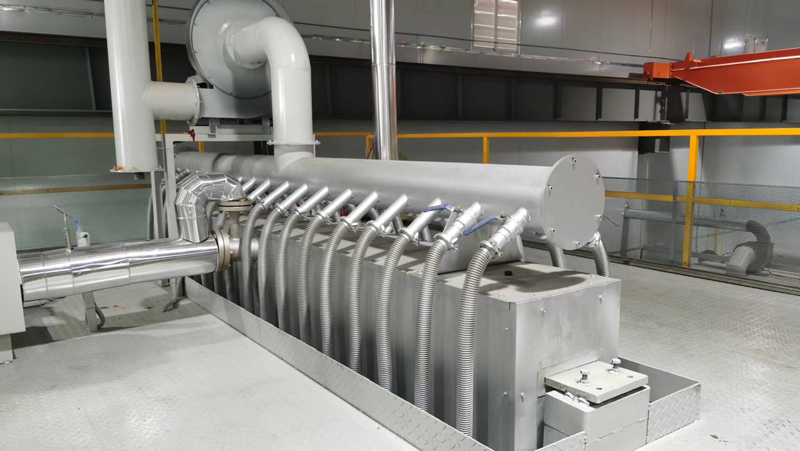 Calendering & Precision Winding
Mechanical properties of spunbond fabric are locked in at the calendering stage. Our double-roller thermal calendars use internal heating oil circulation to keep temperature variation across the roller face within ±1°C. The surface patterns are custom-etched to balance soft-hand requirements with superior tear resistance, followed by high-speed automatic winders.
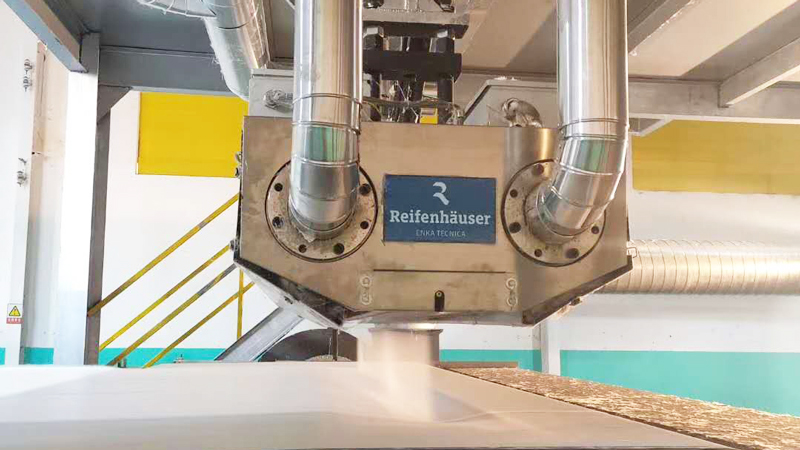
Ensuring compliance, fast commissioning, and local maintenance support for nonwoven producers across the globe.
Our manufacturing and assembly lines fully adhere to European CE and ISO9001 quality management guidelines. Control cabinets and mechanical frameworks are built using internationally recognizable, standard safety protocols.
We dispatch specialized engineers to your site to handle mechanical leveling, electrical integration, system calibration, and pilot runs. We train your operations crew until they can comfortably operate the line independently.
Every HG line is backed by a 24-month comprehensive engineering warranty. We provide remote diagnostic assistance via PLC-linked network modems alongside on-site service visits to maximize production uptime.
Get professional answers to technical queries regarding machine configurations, raw material processing, and plant operations.
An "S" line uses a single spunbond spinning beam to produce single-layer nonwoven fabric, mostly used for packaging. "SS" integrates two spinning beams for double-layer fabric, providing improved softness, uniform thickness, and higher tensile strength. "SMS" (Spunbond-Meltblown-Spunbond) integrates a meltblown die head between two spunbond beams, producing a composite fabric with high tensile strength and high liquid-barrier filtration properties, ideal for medical face masks and surgical gowns.
Our 5th Generation system optimizes the air drafting channel. By utilizing a narrow-slit slot attenuator, it increases the filament draw speed with less pressurized air consumption. This reduces blower energy demand while producing thinner filaments (down to 1.5 denier), lowering polymer consumption and saving electricity.
Yes, our extrusion screws and spinning beams can be optimized to process biodegradable polylactic acid (PLA) and PBAT chips. PLA requires precise heating controls and specialized dryers because of its moisture sensitivity and lower melt strength. We provide custom-designed systems for these materials.
We offer full turnkey engineering, which includes sending senior engineers to install, align, and calibrate the production line at your facility. We also provide comprehensive operator training, covering PLC control management, melt filter screen changes, spinneret cleaning, and calendar alignment.
Our online recycling machine pulls edge trimmings directly from the slitter using a pneumatic venturi feed. The waste is conveyed to a compact extruder, melted, and fed back into the main extruder inlet. This closed-loop recycling setup eliminates material waste and maintains high fabric quality.
An SMS line typically requires a minimum factory length of 30 meters, a width of 15 meters, and a clear vertical height of 11 to 13 meters to accommodate the tall gravity-fed drafting tower. We provide detailed 3D factory layout drawings during the pre-engineering phase to optimize space.
Select from our targeted single-beam, double-beam, and advanced multi-beam composite configurations designed to run continuously with low downtime.
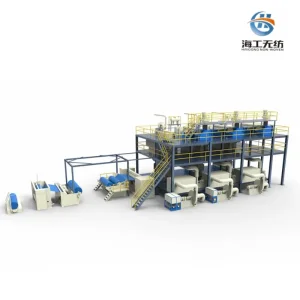
Cost-efficient single spinning beam machine configured for entry-level nonwoven fabric manufacturing, ideal for manufacturing packaging wraps.
View Technical Specs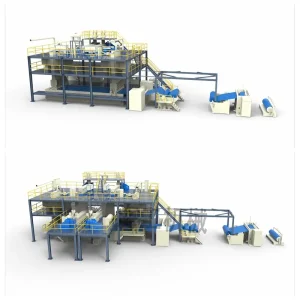
High-tech SMMS/SSMS composite production system engineered to produce exceptional medical barriers and high-efficiency filtration media.
View Technical Specs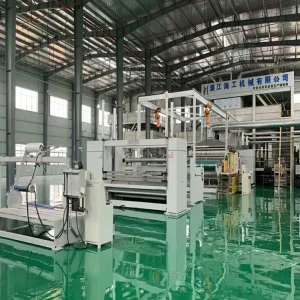
Industrial manufacturing plant designed for the high-volume, reliable production of spunbond fabrics across varying densities.
View Technical Specs
Standard S-beam spunbond line offering high operational reliability, easy product changes, and a small space requirements.
View Technical Specs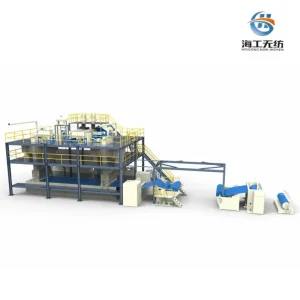
High-speed double spinning beam (SS) system built to manufacture uniform hygiene coversheets and geotextiles with robust mechanical properties.
View Technical Specs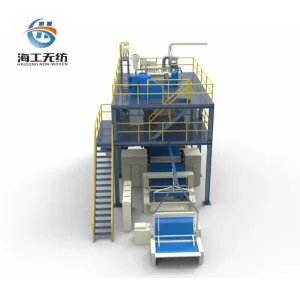
Engineered to produce uniform spunbond webs under optimized pressure profiles, maximizing production yield while minimizing maintenance requirements.
View Technical Specs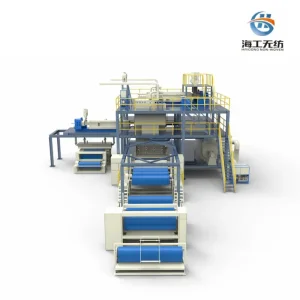
Specialized composite nonwoven machinery engineered to process diverse polymers and additives, expanding your production versatility.
View Technical Specs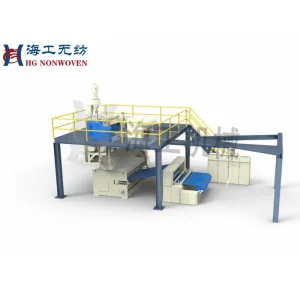
A high-stability spinning system providing uniform fiber distribution and balanced cross/machine direction tensile ratios.
View Technical Specs HG NONWOVEN