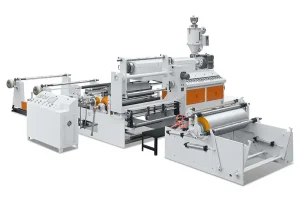
Engineered for multi-layer composite structures, delivering flawless thermal and adhesive bonding for heavy-duty barrier fabrics.
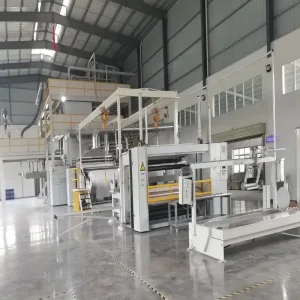
Delivers high-output capacity with precise filament attenuation, perfect for demanding industrial and commercial applications.
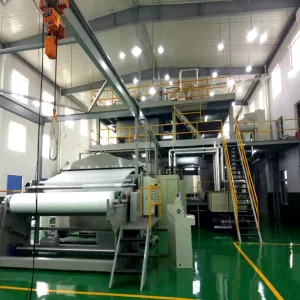
High-efficiency single-beam system tailored for packaging, agriculture, and eco-friendly consumer bag production.
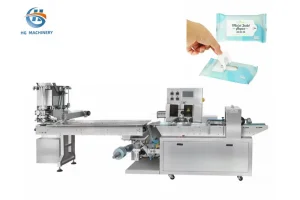
High-precision packaging machinery integrated with multi-lane slitting, folding, and chemical dosing systems.
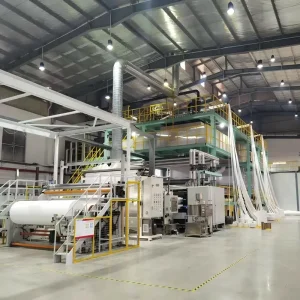
Industrial-scale line designed for continuous filament web forming, featuring optimized thermal calendar systems.
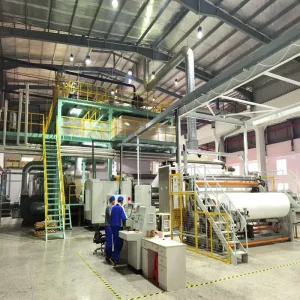
Multi-beam configuration offering advanced cross-directional tensile strength and superior web uniformity.
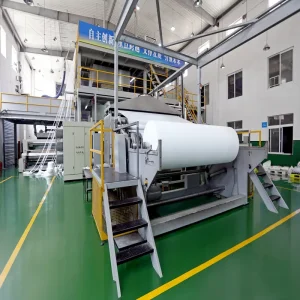
A versatile and flexible machine concept built for easy adjustments between varying grammages and polymers.
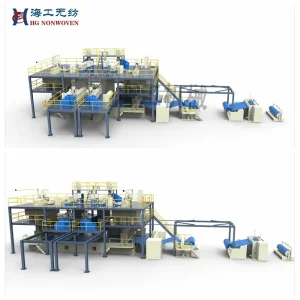
Combines Spunbond and Meltblown technologies to yield composite medical-grade and high-barrier filtration fabrics.
The global demand for nonwoven materials is undergoing a structural paradigm shift. No longer limited to simple packaging products, contemporary spunbond and meltblown fabrics are now vital elements in high-performance filtration, medical barriers, automotive components, and sustainable agricultural geotextiles. As global environmental protocols tighten, industrial buyers face the critical task of upgrading production capacities to meet strict international standards.
HG Nonwoven Machinery stands at the forefront of this industrial transformation. As an authoritative engineering leader based in China, we develop complete turnkey spunbond, meltblown, and composite nonwoven fabric lines. By combining overseas engineering concepts with domestic supply chain efficiencies, we offer international manufacturers a pathway to optimize capital expenditures (CAPEX) while achieving world-class operational performance.
"The future of nonwoven production lies in raw material versatility, energy conservation, and micro-fiber precision. Our fifth-generation engineering framework addresses these challenges directly."
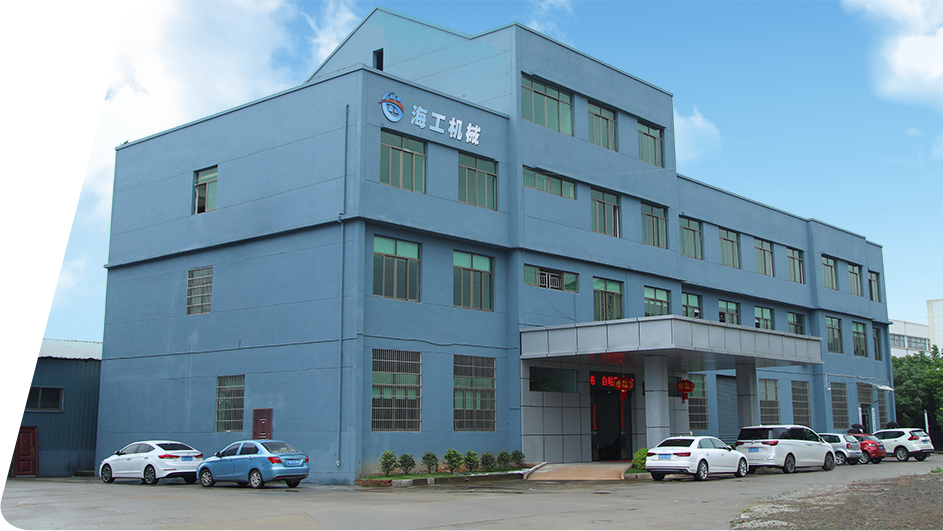
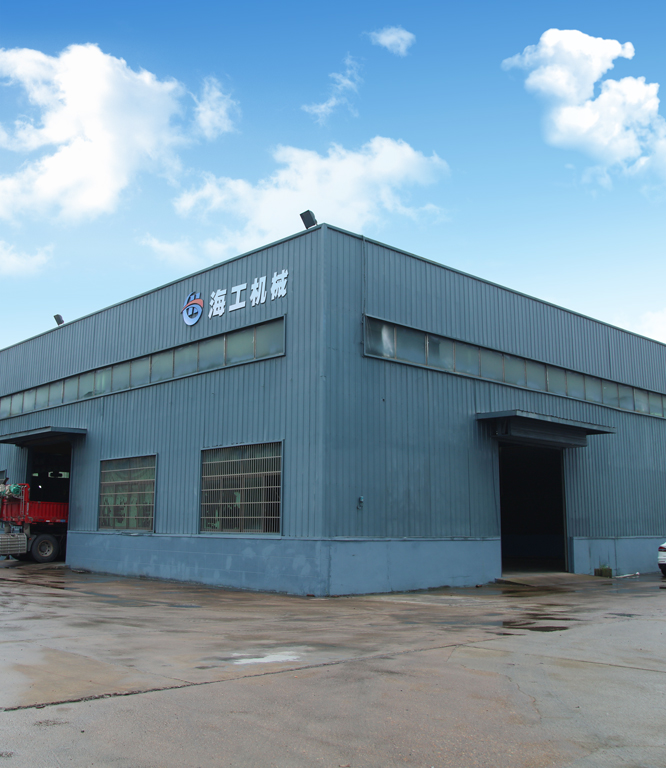
Established in 2014, Pujiang HG Nonwoven Machinery has grown into a highly trusted brand in the polymer-to-web engineering sector. Our engineering team brings over 20 years of hands-on technical experience to every installation, integrating automation with advanced aerodynamic draw systems. We specialize in custom-tailored plants designed to process PP, PLA, and other eco-friendly raw materials into high-performance fabrics.
Our commitment goes beyond simply selling machinery. We act as a long-term engineering partner, guiding our clients from initial market analysis and project feasibility reports to layout design, installation, and final operator training. Our global service network ensures your investment delivers optimal uptime and consistent fabric quality year after year.
Our lines utilize advanced aerodynamic slot-drawing and pressurized distribution technology. By optimizing pressure chambers and airflow, we produce web profiles with exceptional uniformity, high tensile strength, and minimal energy loss.
We provide localized feasibility reports and raw material market analysis to help you make informed decisions. We evaluate regional fiber demands and energy costs to ensure your facility achieves profitability quickly.
We supply the entire production cycle. Alongside our core spunbond and meltblown lines, we integrate in-line edge trim recycling systems, high-speed slitting rewinders, flexographic printers, and multi-station lamination lines.
Our engineering support operates 24/7. From initial onsite mechanical alignment and electrical calibration to advanced remote digital diagnostics, we keep your machinery running smoothly and minimize unscheduled downtime.
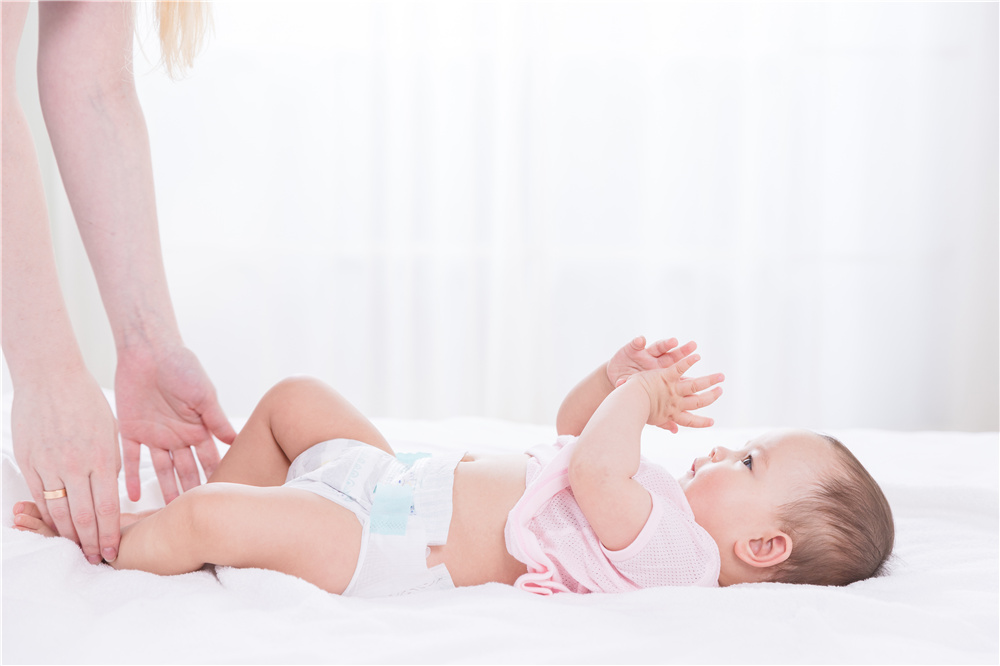
Our machinery produces ultra-soft, breathable, and highly uniform nonwovens with excellent fluid distribution. Ideal for baby diapers, feminine hygiene products, and adult incontinence pads.
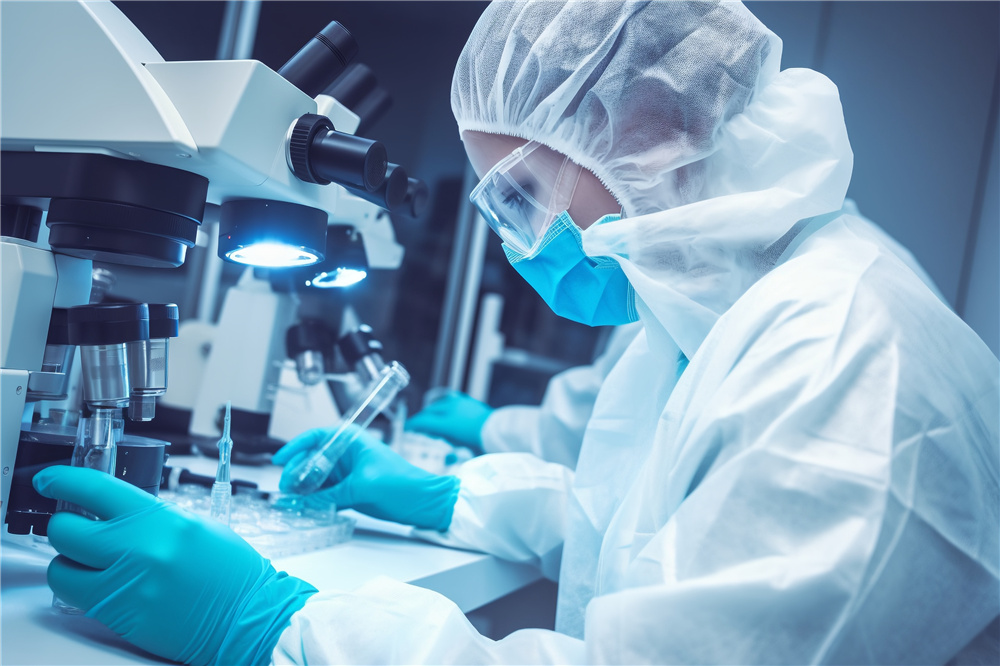
Specially configured multi-beam SMS/SMMS lines deliver high hydrostatic head pressure and bacterial filtration efficiency. Perfect for disposable surgical gowns, drapes, and face masks.
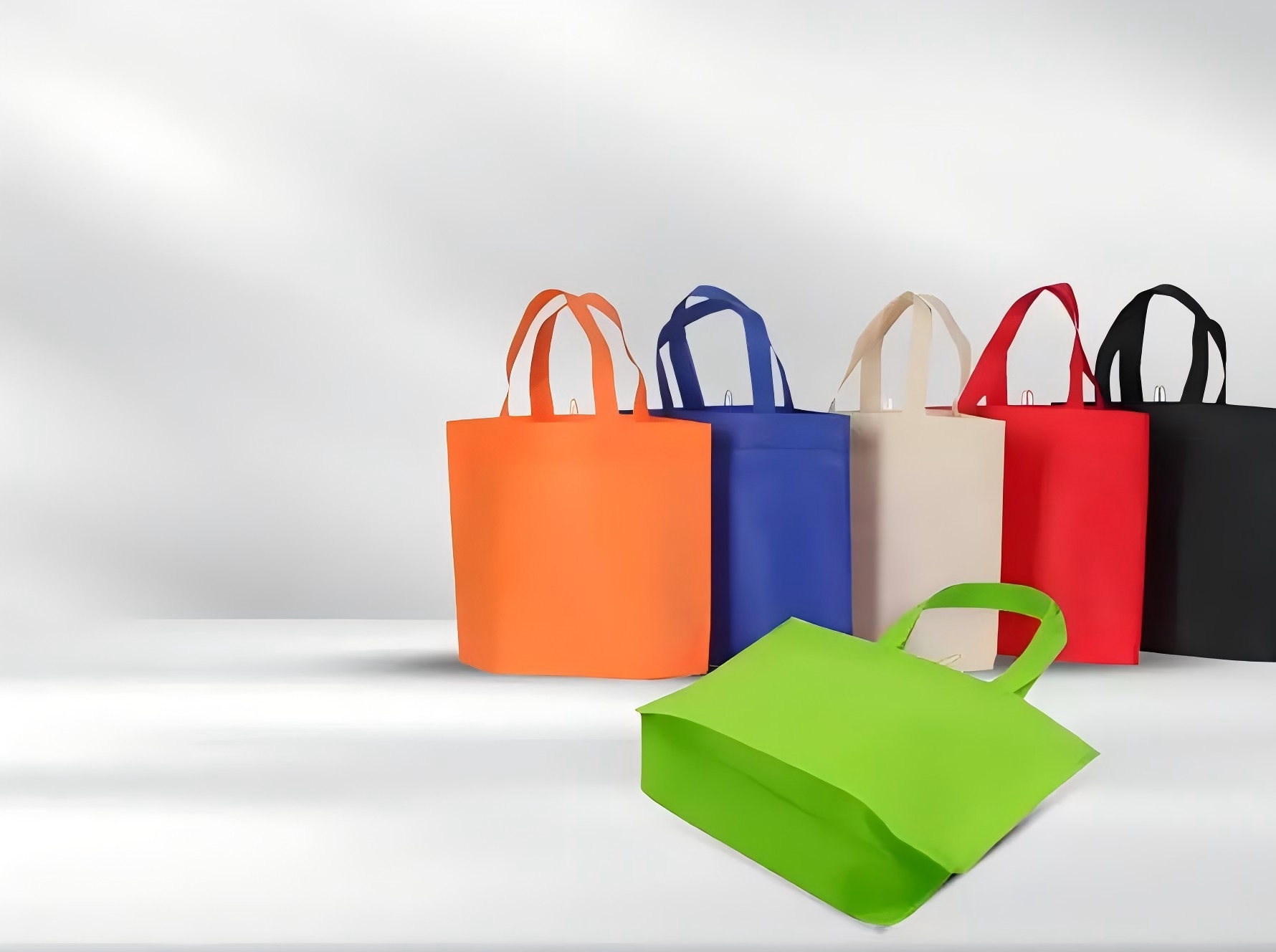
High-tensile single-beam (S) and double-beam (SS) machines designed for durable reusable shopping bags, agricultural storage sacks, pocket spring wraps, and apparel interlining.
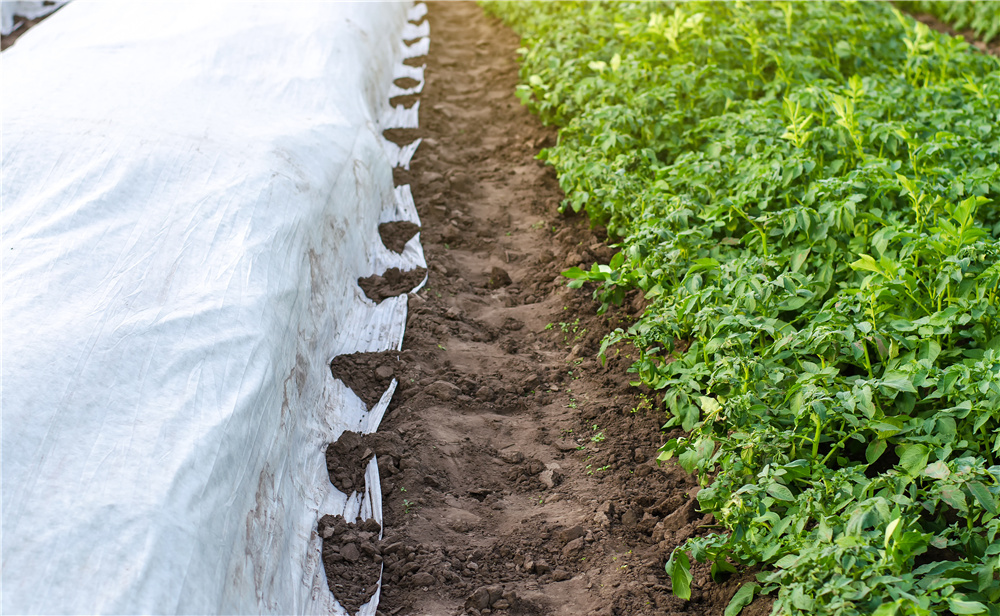
Lines optimized for outdoor fabrics that resist UV degradation. These lightweight materials create microclimates for crops, shield against frost and pests, and allow balanced air and water flow.
To produce nonwoven fabrics with high dimensional stability and uniform fiber distribution, you must control the polymer melting, extrusion, draw, and web-forming phases with absolute precision. Modern industrial installations rely heavily on coordinated thermal control. HG Nonwoven Machinery integrates advanced heating systems that keep temperature fluctuations within ±1°C across the entire width of the spinneret. This tight control is crucial for managing the Melt Flow Rate (MFR) of polypropylene, ensuring consistent filament diameters down to the sub-micron scale.
Our 5th-generation aerodynamic drawing system represents a major leap in spunbond technology. Conventional machines often rely on high-pressure air channels that can lead to turbulence and uneven web formation. Our design uses a closed-loop slot draft system. In this setup, extruded polymer filaments are attenuated by high-velocity, temperature-controlled air in a continuous slot zone. This approach ensures consistent fiber stretching, leading to excellent tensile strength in both machine direction (MD) and cross-direction (CD) while keeping energy use low.
For medical and industrial filtration applications, composite SMS (Spunbond-Meltblown-Spunbond) systems are the industry standard. The spunbond layers provide the necessary tensile strength and structural support, while the middle meltblown layer acts as the high-precision filter media. Balancing air pressure, melt temperatures, and conveyor belt speed across these multi-beam systems requires advanced PLC control. Our centralized control systems monitor these parameters in real time, allowing operators to make micro-adjustments on the fly without stopping production.
Purchasing a nonwoven production line is a major capital investment that requires careful planning. Successful procurement starts with a detailed feasibility study that aligns the machine configuration with the demands of your target market. For example, setting up a line for the hygiene market requires high-speed SS or SSS systems capable of running thin, ultra-soft webs at high speeds. Conversely, producing industrial geotextiles requires heavy-duty single-beam lines built to handle high-grammage materials with high tear resistance.
At HG Nonwoven Machinery, we guide our customers through every step of this analysis. Our project support covers:
Environmental sustainability is transforming the nonwoven industry. With growing global concern over single-use plastics, manufacturers are actively seeking alternatives to traditional petroleum-based polypropylene. The processing of biodegradable and bio-based polymers, such as Polylactic Acid (PLA) and Polyhydroxyalkanoates (PHA), is no longer just a research topic—it is a live market requirement. Sourcing equipment that can run these alternative materials is essential for long-term competitiveness.
Processing PLA presents unique thermodynamic challenges. It is highly sensitive to moisture and has a much narrower processing temperature window compared to PP. Our fifth-generation lines are designed to handle these sensitivities. They feature advanced drying systems, customized screw geometry, and multi-zone temperature controls that prevent polymer degradation. This flexibility allows manufacturers to switch between standard PP and biodegradable PLA formulations on the same machine, helping them adapt quickly to changing market regulations.
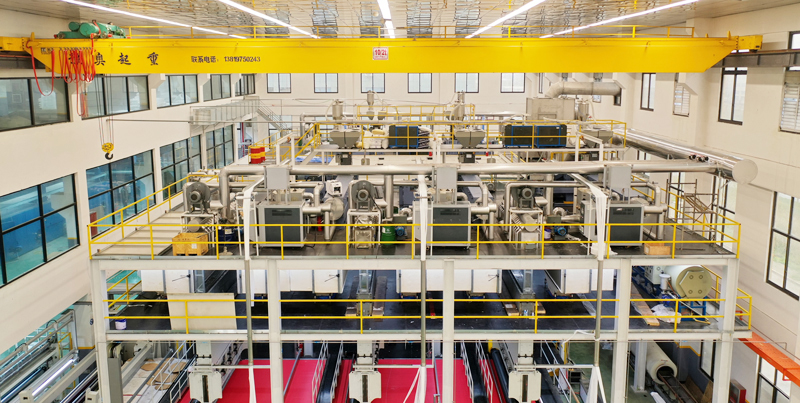
Additionally, minimizing waste within the manufacturing loop is a major factor in driving down production costs. Modern nonwoven plants must address the handling of edge-trim waste. Our integrated inline recycling systems continuously collect edge trims, process them back into pellets, and feed them directly back into the main extruder. This closed-loop system reduces material waste to near zero, helping you maintain high profitability while meeting modern ESG (Environmental, Social, and Governance) targets.
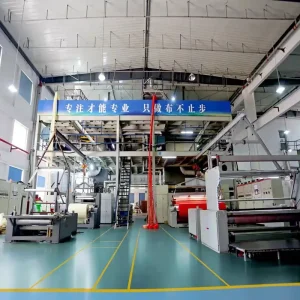
A high-capacity production system featuring automated tension control and a high-precision calendar system.
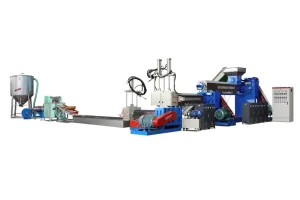
Designed for onsite processing of scrap materials, transforming edge-trims directly back into reusable raw pellets.
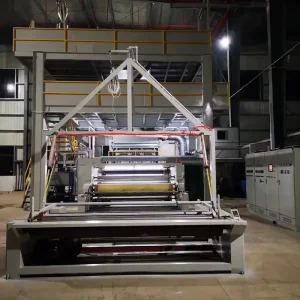
High-efficiency extrusion line engineered for low power consumption and high fabric uniformity.
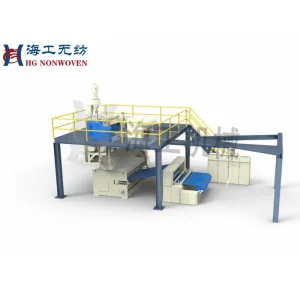
Reliable and robust single-beam system built for agricultural and basic packaging materials.
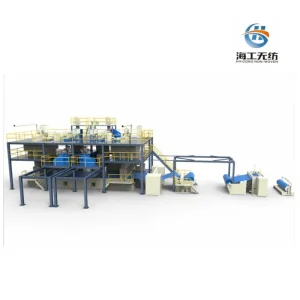
Flexible system configurable in 1600mm, 2400mm, or 3200mm widths to meet varying production requirements.
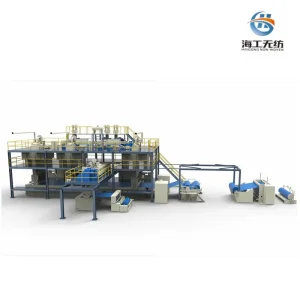
Engineered for high filament consistency, creating fabrics with balanced tensile strength in both directions.
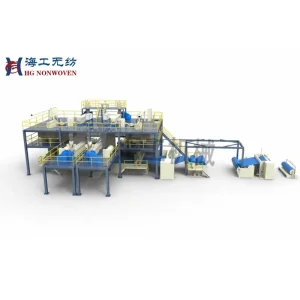
High-speed, multi-beam composite line built to produce hygiene and medical-grade barrier fabrics.
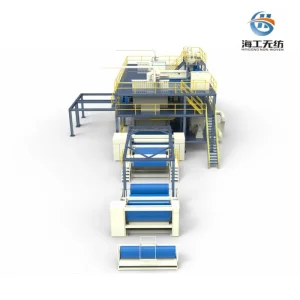
Compact, high-precision line optimized for specialized production runs and quick width adjustments.
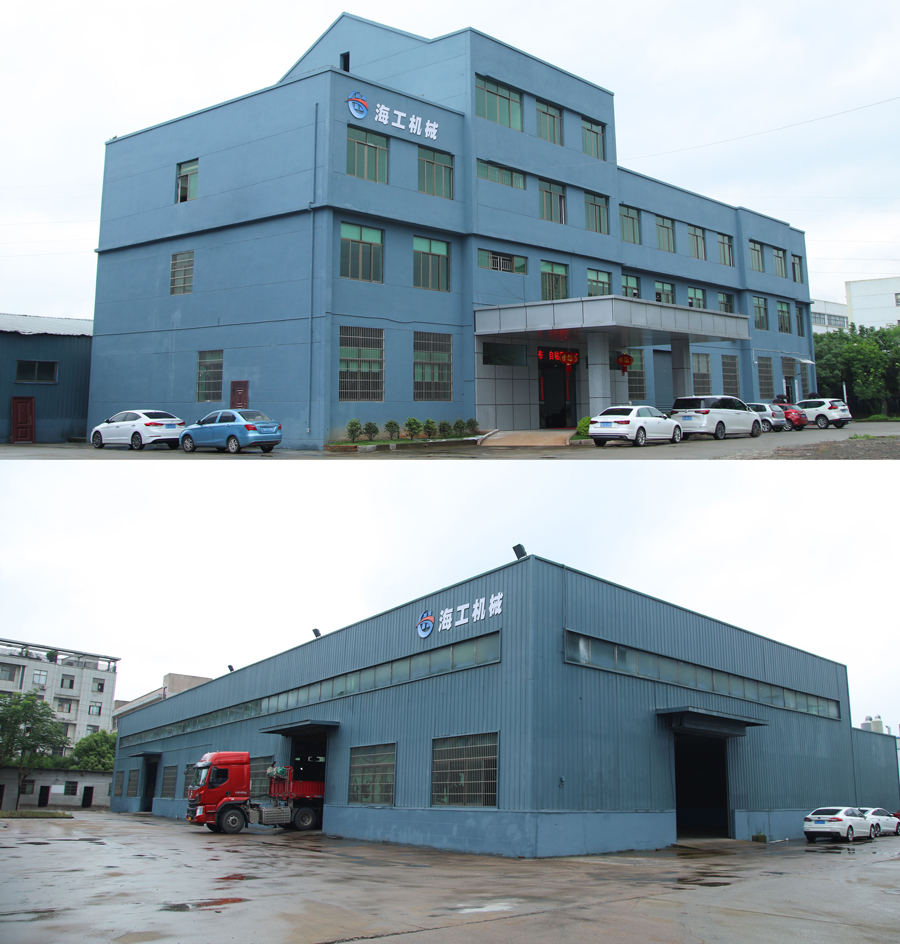
For international buyers, auditing a foreign factory is a critical step in the procurement process. It is important to look beyond basic sales brochures and verify the engineering standards used in the workshop. A reliable manufacturer must hold valid certifications, such as ISO9001 for quality systems and CE compliance for electrical safety. More importantly, the manufacturer should be able to demonstrate advanced assembly techniques, such as dynamic balance testing for high-speed rollers and computerized testing of spinneret capillary dimensions.
At HG Nonwoven Machinery, we operate with full transparency. We welcome third-party audits and offer virtual factory tours for clients who cannot visit in person. Every step of our manufacturing process—from sourcing raw steel and machining components to final electrical wiring and paint application—is tracked and logged. This detailed record keeping ensures that replacement parts can be precisely matched to your machine's exact build history for years to come.
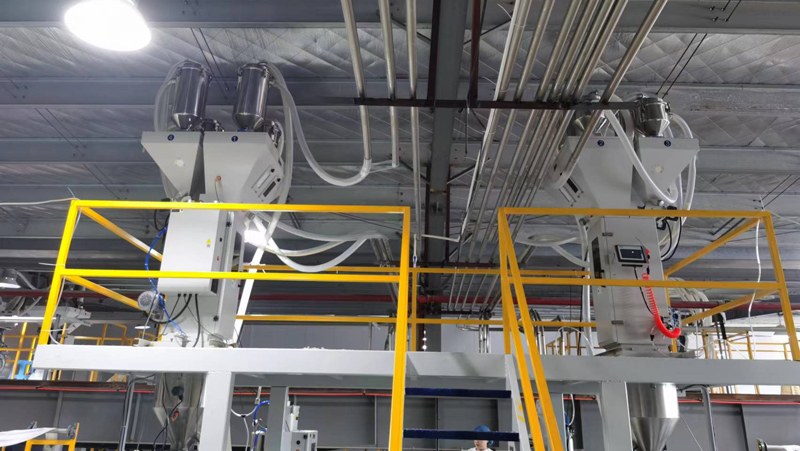
Our commitment to safety and quality is reflected in the components we use. We partner with leading international suppliers for critical systems: Siemens for PLCs and touch-screen interfaces, Omron for temperature controllers, and SKF or NSK for high-load bearings. By using globally available, top-tier components, we ensure that basic maintenance parts can be sourced locally in your home market, minimizing shipping delays and keeping your downtime to a minimum.
The lead time ranges from 90 to 120 days, depending on the complexity of the line (e.g., single-beam S vs. multi-beam composite SMS/SMMS) and custom width requirements. This timeline includes layout design, component machining, assembly, electrical programming, and factory testing before shipment.
Yes, our 5th-generation machines are designed with the precise temperature control, feeding, and drying systems required to process Polylactic Acid (PLA) and other bio-based polymers. This configuration helps you adapt to changing environmental regulations.
Our comprehensive warranty covers all major structural components, PLC systems, calendars, and drawing systems. We provide replacement parts and remote technical diagnostics. For onsite repairs, we can dispatch engineers to your facility to minimize downtime.
Once the machinery arrives at your facility, our engineering team travels to your site to handle installation, calibrate the systems, and perform test runs. We also run a comprehensive training program for your local team, covering machine operation, preventative maintenance, and safety protocols.
A standard turnkey installation includes the main extrusion and spunbonding unit, calendar system, winder, slitter, inline recycling system, air chilling system, and central control panel. We can also integrate lamination machines, printing systems, and bag-making lines based on your production goals.
 HG NONWOVEN