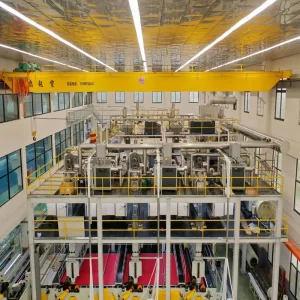
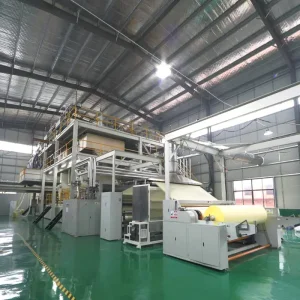
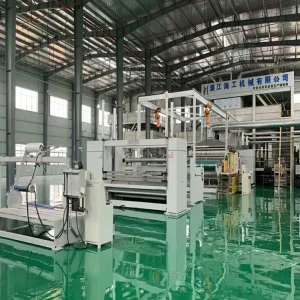
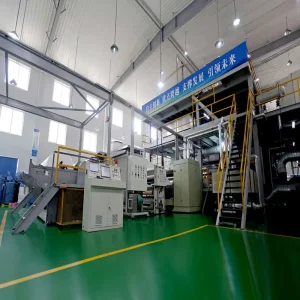
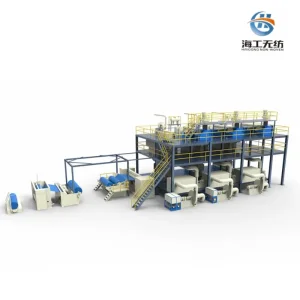
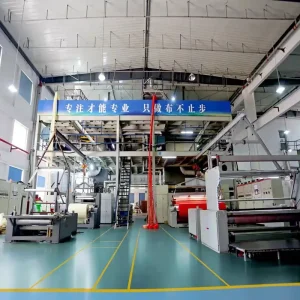
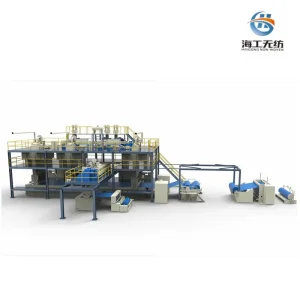
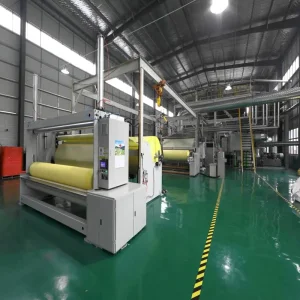
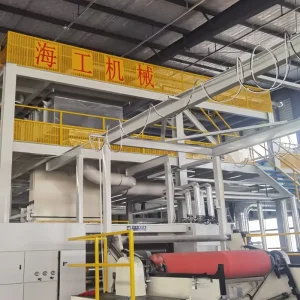
Explore our elite range of industrial nonwoven and secondary processing machinery engineered to optimize material characteristics.
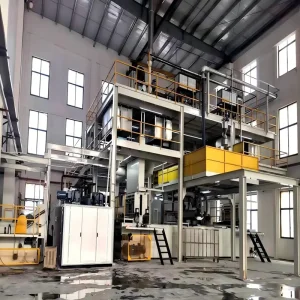
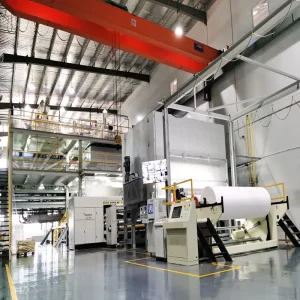
Within the polymer extrusion and nonwoven web formulation industries, the terminology surrounding "HG Shrinking Machines" corresponds directly to the crucial thermo-bonding, orientation, and web consolidation processes. When manufacturing high-performance polypropylene (PP) spunbond and meltblown fabrics, controlling the physical properties of the web—specifically, its tensile strength, elongation, and dimensional thermal shrinkage—is paramount.
As a leading supplier and factory in China, HG Nonwoven Machinery has integrated sophisticated thermal management and controlled shrink-calendering units within our 5th-generation extrusion lines. These machinery configurations allow global manufacturers to produce materials that conform to stringent technical requirements, limiting unwanted shrinkage in high-temperature environments while maximizing softness, absorption, and barrier efficiency.
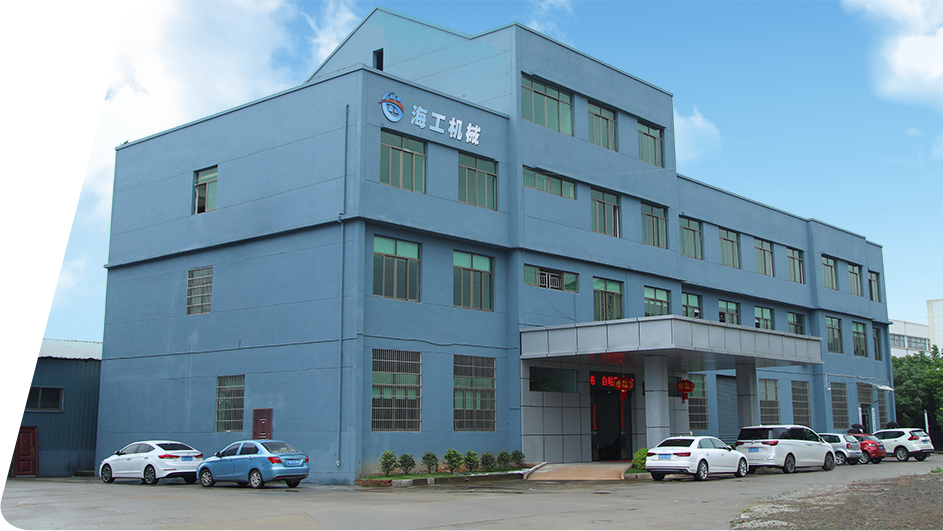
Addressing macro-economic shifts, sustainability metrics, and localized regulatory compliance in capital equipment procurement.
Global manufacturers require highly resilient equipment that reduces dependency on volatile raw material characteristics. HG Nonwoven Machinery integrates precise pressure and heat control systems, ensuring consistency even when using secondary recycled polymers.
Energy profiles account for over 30% of operational nonwoven fabrication costs. Our 5th-gen spinning technology features optimize heating loops, reducing total power consumption per ton of output by up to 15% compared to legacy machinery designs.
Every HG production line satisfies CE, ISO9001, and international environmental directives. Our safety configurations align with European OSHA standards and North American UL field validation specifications, minimizing import and commissioning friction.
As technical textiles move toward lighter base weights (down to 8-10 GSM) while requiring high mechanical tensile characteristics, the role of post-spinning thermal shrinking and calendering has evolved rapidly.
Our engineering roadmap focuses on integrating IIoT-driven closed-loop feedback systems. These systems measure cross-directional (CD) web density in real-time, immediately adjusting the thermal profiles of individual calender rollers. This precise manipulation controls shrinkage properties during production, preventing deformation and securing extreme uniformity.
By coordinating the spinning beam speed, drawing tension, and calender thermal cycles, HG machinery achieves optimal physical properties. This structural control produces webs with minimal residual shrinkage, perfect for critical sterilization applications in medical fields and precision laminations.
Tailoring nonwoven structural parameters to address the mechanical demands of diverse industries worldwide.
Ultra-soft, low-GSM spunbond and SMS fabrics suitable for baby diapers, sanitary napkins, and adult incontinence products, emphasizing fluid control and skin comfort.
Engineered SMS/SMMS composites providing high hydrostatic resistance, barrier protection against biological hazards, used for surgical gowns, face masks, and drapes.
Reinforced spunbond layers for structural packaging, heavy-duty shipping bags, and protective linings, featuring high tear index and low thermal distortion.
UV-stabilized, highly permeable crop covers regulating humidity and microclimates. The precise fiber layout ensures excellent water transmission while blocking pests.
Proven configuration modules featuring advanced thermal and mechanical bonding designs.
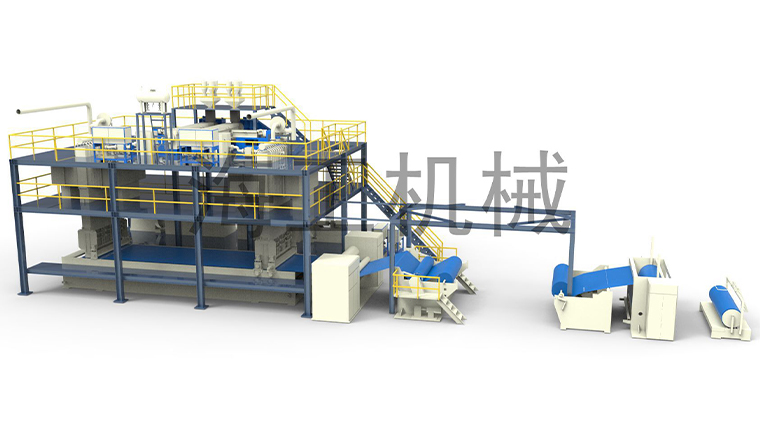
Optimized for packaging bags, furniture interlinings, and agricultural field protection. Features high-speed drawing rollers and uniform temperature calendering to prevent dimensional shrinkage.
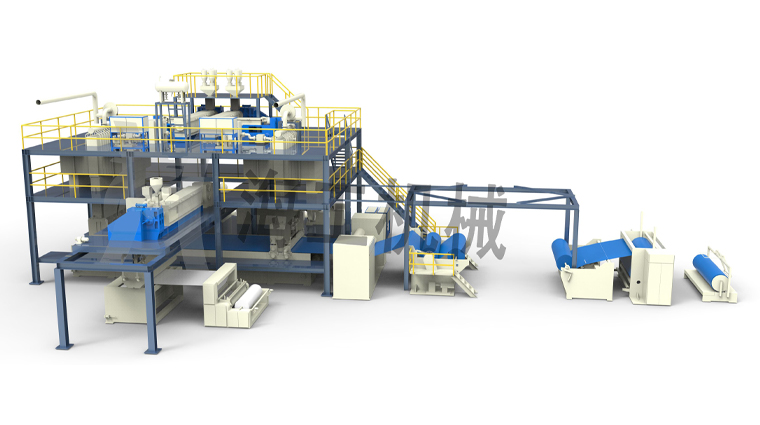
Combines mechanical strength from spunbond beams with the sub-micron filtration efficiency of meltblown technology. Ideal for high-grade medical protective fabrics.
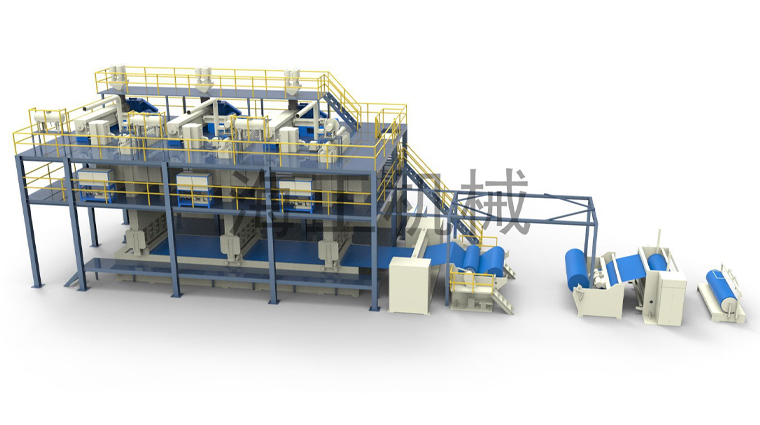
Four distinct layers (Spunbond-Meltblown-Meltblown-Spunbond) engineered to provide exceptional barrier efficiency without compromising air breathability.
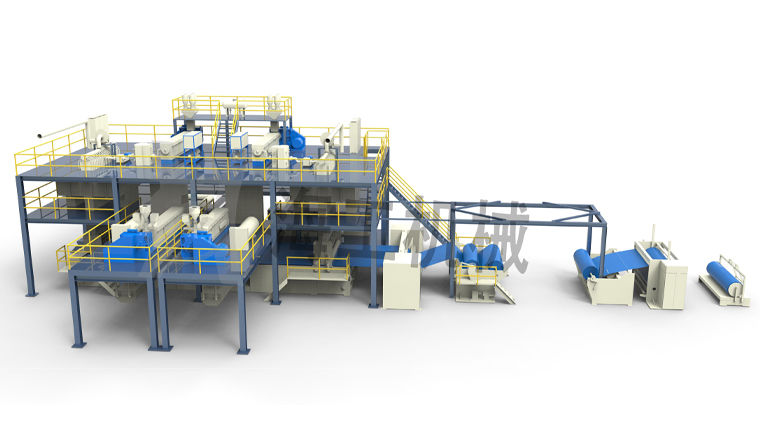
Top-tier multi-beam line offering the highest barrier properties, premium softness, and skin-friendliness for professional medical and hygiene markets.
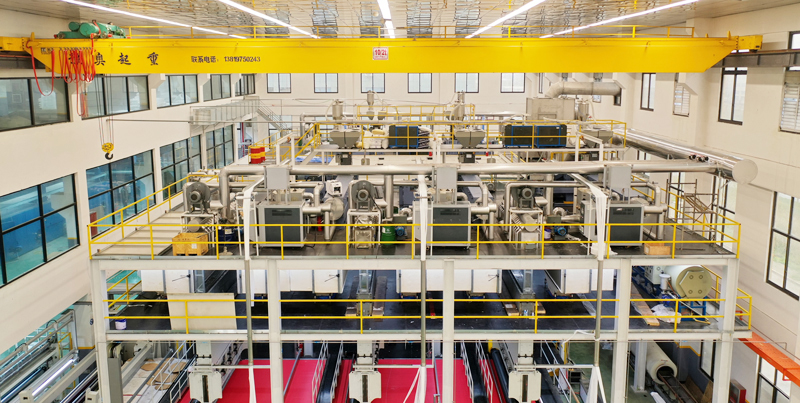
HG Nonwoven Machinery delivers complete turnkey engineering capabilities. From raw material intake, dosing, and mixing, through the extrusion process, fiber drawing, web laydown, heat setting, and final slitting/rewinding.
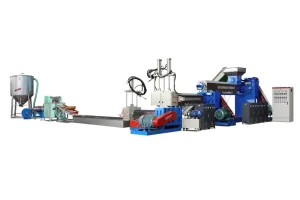
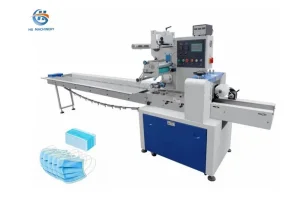
We supply auxiliary machineries such as PP recycling granulators, fabric slitting machines, flexo printing devices, and laminators, allowing our clients to configure complete functional production hubs under a single engineering contract.
Our localized support structure includes remote PLC online diagnosis, regular technician visits, and local wear-part inventory, minimizing downtime and guaranteeing consistent production output.
Deep dive into operational mechanics, design configurations, and process parameter optimization.
Complete your plant operations with high-efficiency downstream and auxiliary machinery modules.
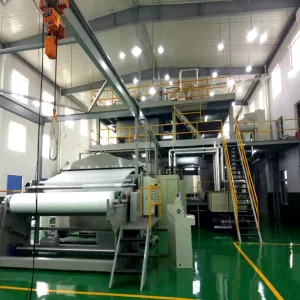
 HG NONWOVEN