Highly customized production lines, optimized for EU power-grid efficiency and certified to CE standards.
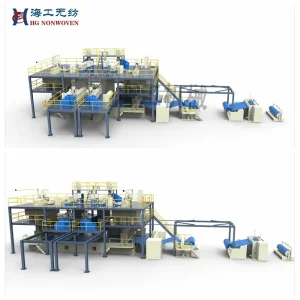
Premium barrier properties for Austrian medical and surgical textile applications.
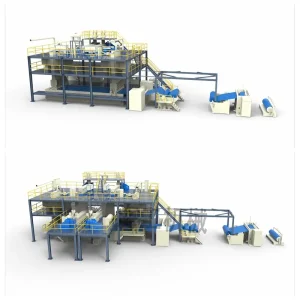
Multi-beam composite line providing ultra-fine fiber filtration and extreme softness.
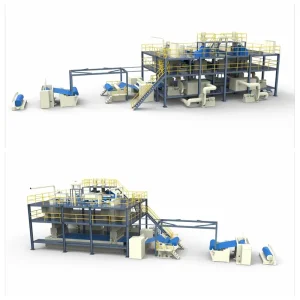
Configured for high-speed manufacturing of premium hygiene barrier products.
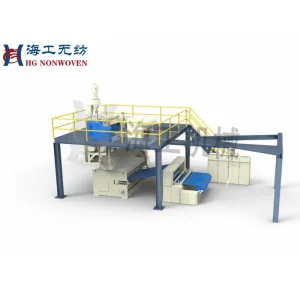
Robust workhorse for packaging, agricultural protective fabrics, and furniture layers.
Years of Engineering Heritage
Global Lines Commissioned
Countries Handled Worldwide
DACH Tele-Diagnostics & Support
The nonwoven manufacturing sector in Austria and the broader Central European region is currently undergoing a structural transformation driven by two massive forces: the European Green Deal and the soaring energy prices that have redefined competitiveness in the DACH (Germany, Austria, Switzerland) region. Austria, with its highly integrated industrial zones extending from the Vienna basin to the upper Austrian chemical clusters around Linz, is demanding a new class of industrial nonwoven machinery that prioritizes absolute resource efficiency, carbon footprint mitigation, and deep automation.
As a leading nonwoven machinery manufacturer and global supplier, HG Nonwoven Machinery integrates advanced technological competencies with local compliance frameworks. To compete in the Austrian market, manufacturers cannot simply install generic machinery. They must establish lines that comply with ÖNORM standards, EU Machinery Directive 2006/42/EC, and grid integration standards. Advanced spunbond lines must minimize waste through closed-loop recycling systems while maintaining throughput speeds up to 600m/min and extremely tight GSM (grams per square meter) variability thresholds.
Our commitment to the Austrian market lies in bridging high-level Chinese precision manufacturing with European engineering tolerances. Since 2014, Pujiang HG Nonwoven Machinery has deployed turnkey engineering solutions that support biodegradable raw material processes, such as PLA (Polylactic Acid) and bio-based polypropylene. This aligns directly with the environmental expectations of premium Austrian consumer brands and B2B clients who evaluate suppliers through the lens of Scope 1, 2, and 3 carbon emissions.
Why European manufacturers partner with HG Nonwoven Machinery for modern production facilities.
Utilizes advanced slot-drawing extrusion methods ensuring high filament consistency, low diameter variance, and exceptional tensile strength profiles in both MD and CD.
Equipped with state-of-the-art heating and air recirculation loops that reduce overall energy demand by up to 20%, satisfying Austria's green efficiency policies.
We supply complete engineering configurations, covering raw material dosing, polymer extrusion, web forming, calendar bonding, winding, slitting, and in-line scrap recycling.
A critical consideration for Austrian manufacturers setting up a nonwoven fabric production plant is the long-term reliability and adaptability of the mechanical components. Under modern user intent queries, engineers seek details about the spinneret layout, drawing chambers, and thermal parameters. HG Nonwoven Machinery integrates a proprietary 5th generation spinning beam structure that improves pressure distribution and polymer melt flow stability. This results in uniform fiber distribution, reducing thin spots and pinholes in the output fabric.
In our SMS and SMMS systems, raw polypropylene chips are automatically conveyed to the gravimetric dosing unit. The extruders are designed with high L/D ratios to guarantee thorough melting and mixing of polymers, particularly when running biodegradable additives or recycled resins. The melt is filtered through double-piston filter changers before being pushed through the spinneret dies. The quenched filaments are drawn using an aerodynamic slot drawing system, which allows higher drawing speeds and results in lower denier fibers (down to 1.5 - 2.0 denier for spunbond, and 1-3 microns for meltblown).
The web is bonded using a high-precision calender roll system featuring electric heating tubes or oil circulation. Our calenders maintain a temperature tolerance of ±1°C across the entire roller width. This is crucial for Austrian medical textile converters who require strict uniformity for sterilization wraps, face masks, and surgical gowns. High precision translates to consistent tensile strength and air permeability, which are scrutinized during certification processes.
Looking towards 2026 and beyond, HG Nonwoven Machinery is actively developing IoT-enabled machine monitoring solutions. By combining PLC architectures with cloud diagnostics, we enable real-time tracking of motor load, heater temperature, line speed, and energy metrics. This allows predictive maintenance, reducing unplanned downtime in high-cost labor markets like Austria. This represents true "Information Gain"—giving buyers a clear roadmap of how their capital expenditure will remain competitive for the next 15 to 20 years.
Where HG Nonwoven Fabric Lines drive value in local markets.
Supplying high barrier SMS & SMMS fabrics for regional hospitals and sterile packaging converters in Lower Austria.
Replacing single-use plastics with reusable, ultrasonic-welded spunbond bags in Austrian supermarkets and retail chains.
UV-treated lightweight spunbond covers protecting crops and nurseries in the agricultural fields of Styria and Burgenland.
Producing fine-denier meltblown and composite webs for engine cabin filters matching strict European industrial specifications.
Purchasing capital equipment from overseas presents complex regulatory and logistical questions. At HG Nonwoven Machinery, we address these challenges through structured support protocols. All machines shipped to Europe are built to conform to the relevant CE safety declarations, using components from international brands like Siemens for PLCs and frequency inverters, SKF or FAG for bearings, and Omron or Schneider for electrical control gear. This simplifies compliance and ensures that local maintenance technicians in Austria can source standard parts without delay.
Our logistical roadmap handles shipping from Shanghai or Ningbo ports directly to European gateways like Hamburg, Rotterdam, or Trieste, with subsequent rail and truck transit to locations in Austria. We provide a complete pre-installation checklist detailing electrical, water, pneumatic, and foundation requirements. Once the components arrive on site, our team coordinates with local Austrian mechanical and electrical contractors to execute the assembly, calibration, and commissioning phases efficiently.
Post-installation, we provide hands-on operator training covering daily operation, recipe management, spinneret cleaning cycles, and emergency shutdown procedures. We also offer a 24-month warranty on structural components, supported by digital remote diagnostics that allow our engineers to troubleshoot PLC logic and process parameters remotely.
Explore our complete machinery lines, designed for long-term productivity and flexible product switches.
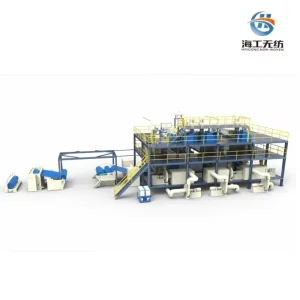
Optimized for medical drape, sterilization wrap, and surgical gown fabric manufacturing.
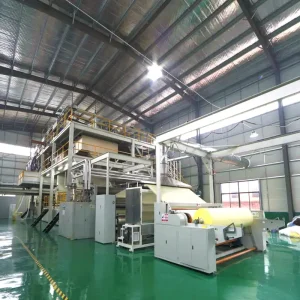
Highly automated line designed for energy-saving bulk spunbond rolls production.
Multi-beam configurations supporting high GSM industrial filter media.
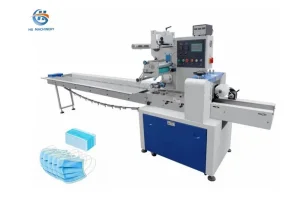
Fully integrated packaging line to automate mask cartoning and bag wrapping.
Modular design allows easy upgrading from single beam to composite structures.
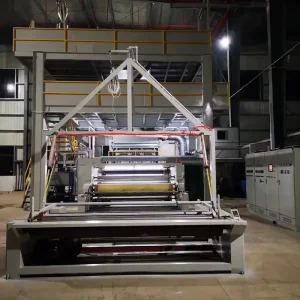
Engineered for minimal waste generation and maximum thermal recycling efficiency.
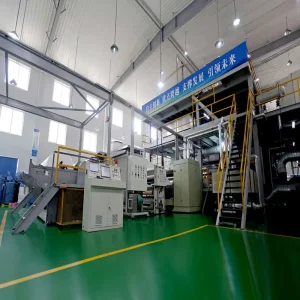
Turnkey solutions covering all auxiliary machinery from storage to output.
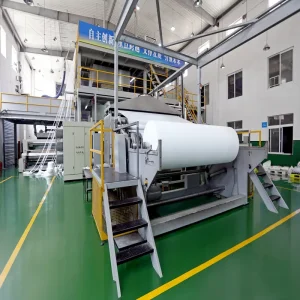
Stable output with cross-lapper integration options for customized fabrics.
To assist technical directors, operations managers, and business investors, we have compiled detailed answers to frequent questions concerning our machinery and Austrian market parameters.
 HG NONWOVEN