HG NONWOVEN
1 / 5
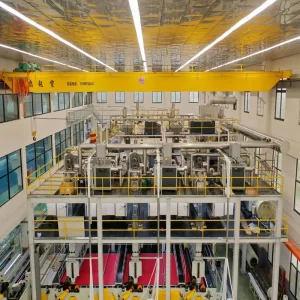
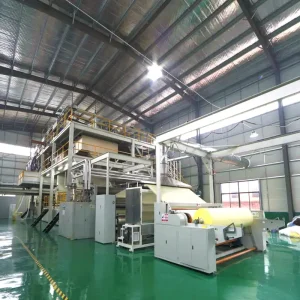
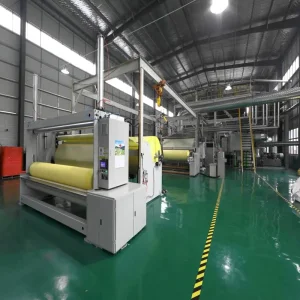
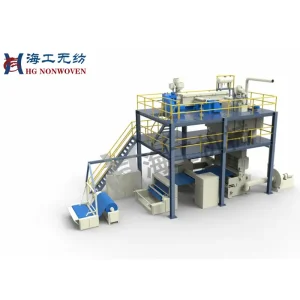
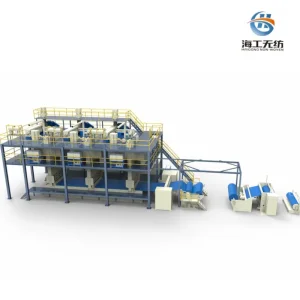
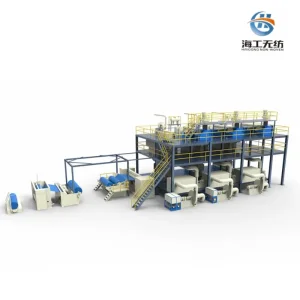
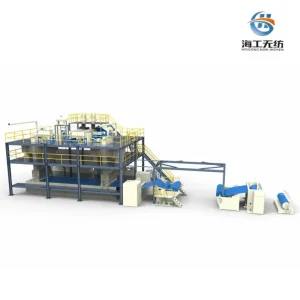
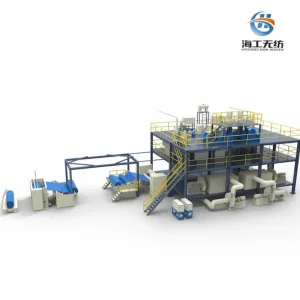
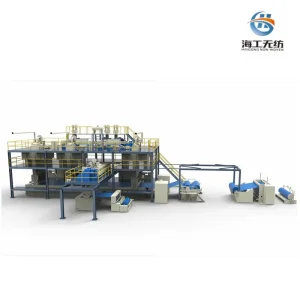
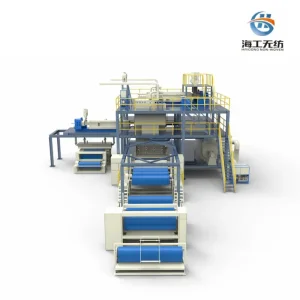
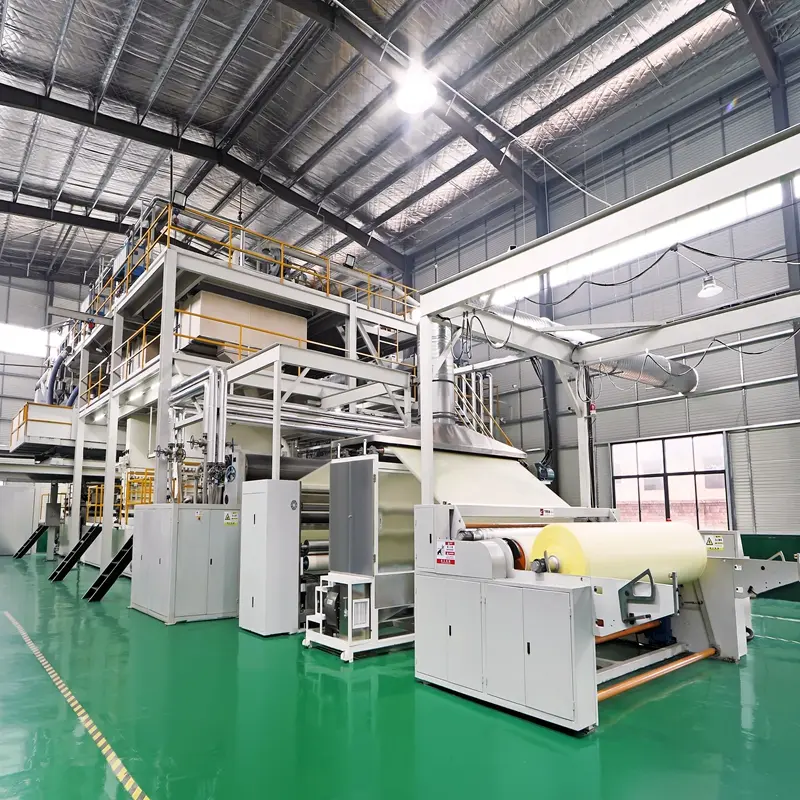
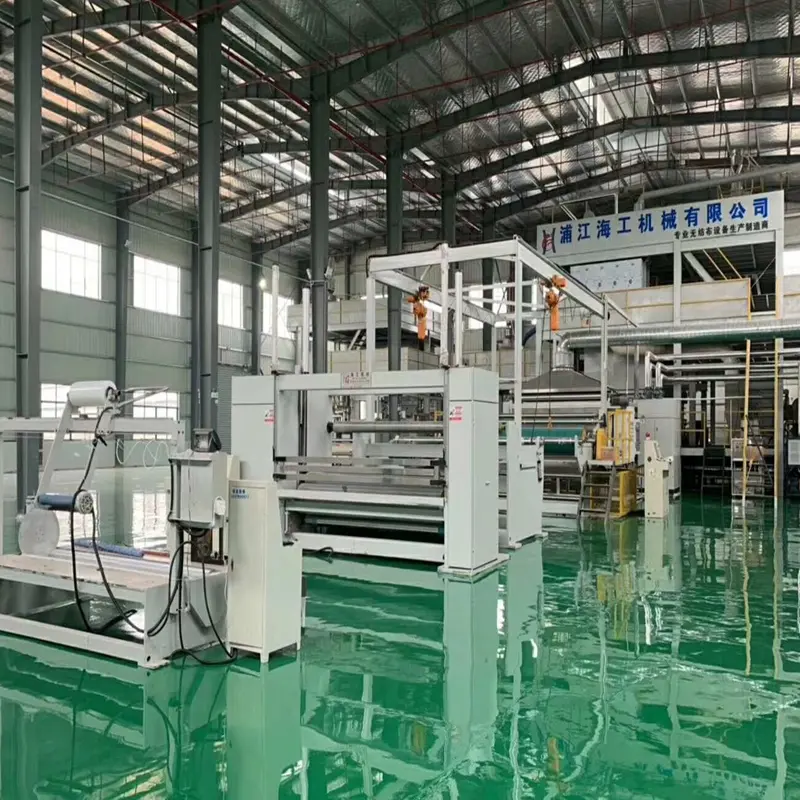
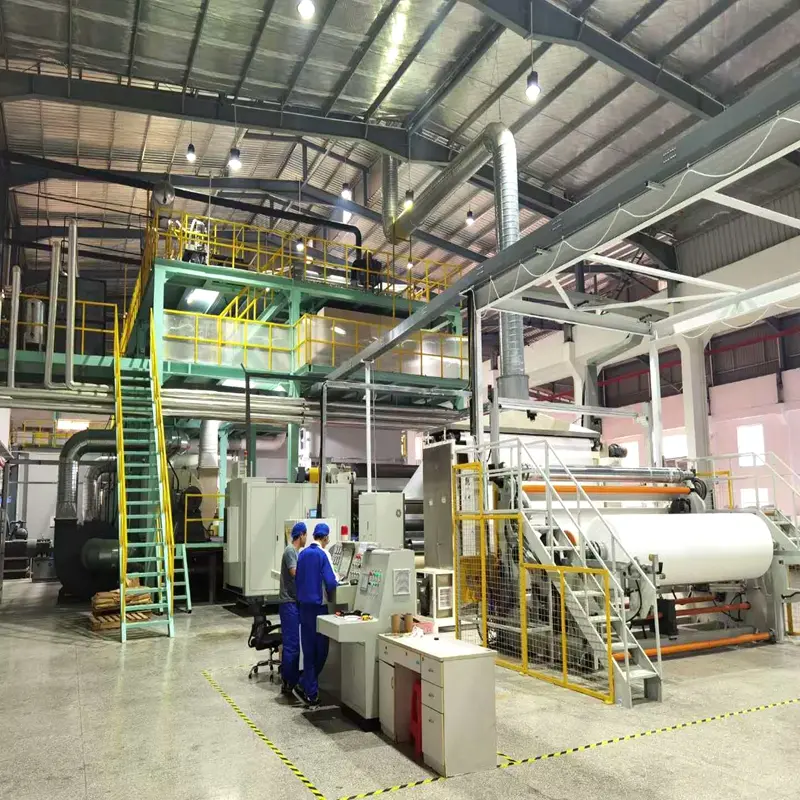
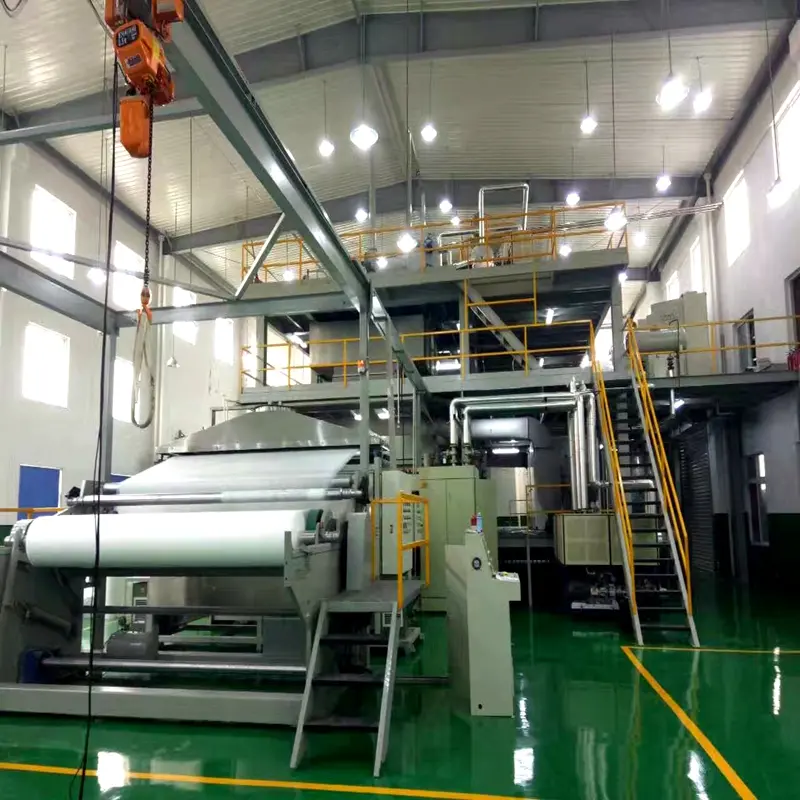
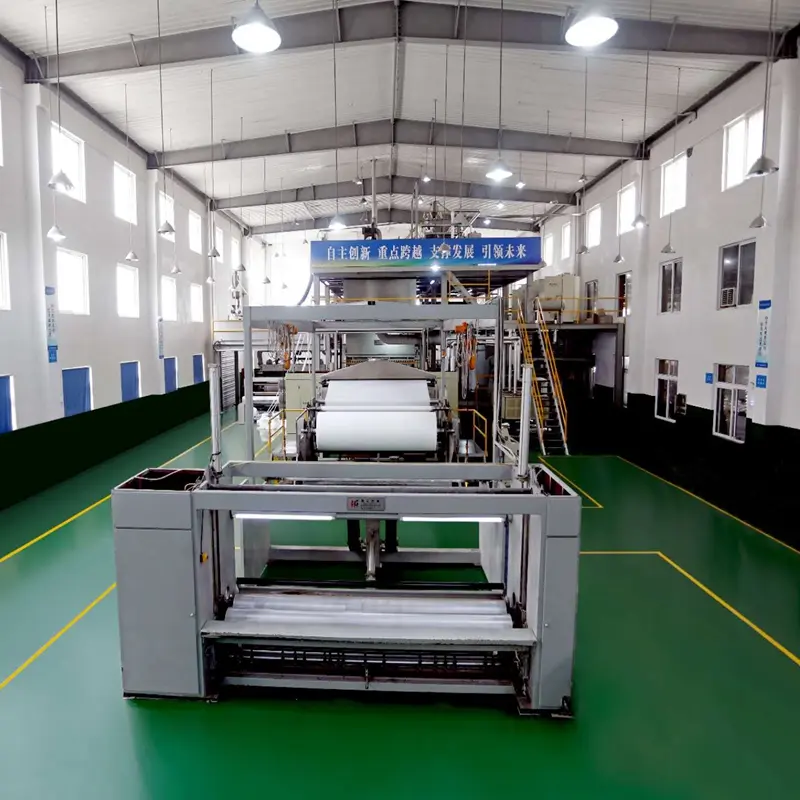
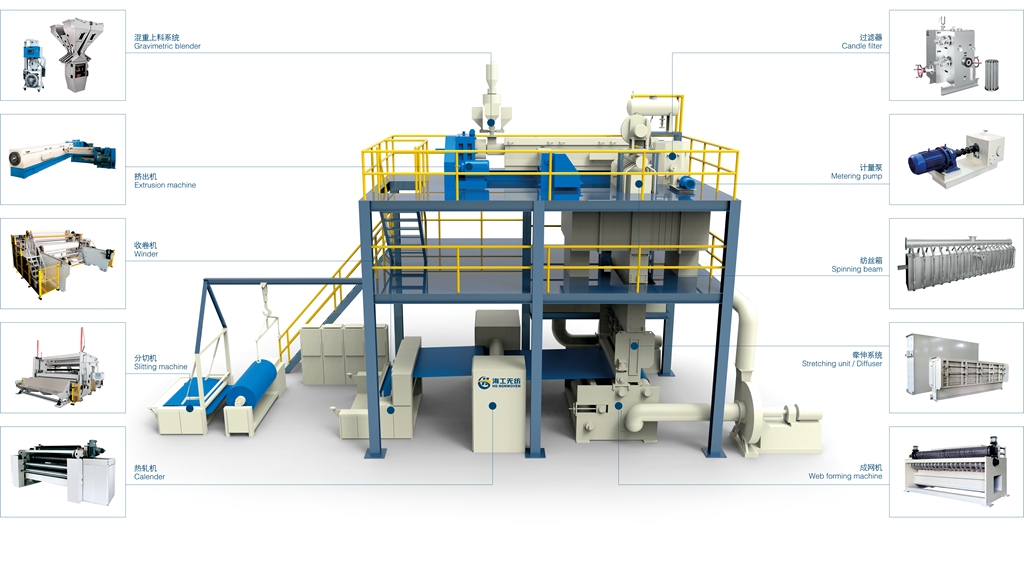
A spunbond nonwoven production line is a highly integrated industrial system. Its core function is to transform solid polymer granules into a uniform, strong web of fibrous material in one continuous process. The entire system can be logically divided into five key functional modules:
Raw polymer pellets are precisely metered and fed into an extruder, where they are melted and homogenized. A precision melt pump then steadily pumps the melt through a filtration unit to remove impurities. Finally, the melt is evenly distributed across the entire spinneret via a temperature-controlled manifold called the spinning beam.
The nascent polymer streams exiting the spinneret first enter a quench chamber, where they are rapidly solidified into solid filaments by controlled cooling air. The filament bundles are immediately drawn into a high-speed air aspirator. Here, supersonic air flow applies a drafting force, stretching the filaments at tremendous speed. This drastically reduces their diameter and increases molecular orientation, granting them the required fineness and strength.
The high-velocity, attenuated filament bundles enter a wide forming section. First, they pass through a diffuser to decelerate and randomize their movement. With the continuous movement of the forming wire (conveyor belt) below and the assistance of suction units underneath, countless filaments settle like snowflakes, piling up and randomly interlapping to form a uniform, lofty, yet unbonded fiber web.
The loose web is conveyed to the bonding unit. The most common method is thermal calendering: the web passes through a pair of heated, pressurized large rollers (the calender), where one roller features a precise pattern (e.g., dots, diamonds) on its surface. The combined action of heat and pressure causes the fibers to fuse at the pattern's contact points, creating a strong yet soft fabric structure.
The bonded fabric may undergo edge trimming and slitting to achieve the standard roll width. It is then wound at high speed into neat jumbo rolls by a fully automatic winder. The entire process is typically equipped with an online quality monitoring system to inspect and record fabric uniformity, defects, and other metrics in real time.
| Model | Model 1600S | Model 2400S | Model 3200S |
|---|---|---|---|
| Production capacity (kgs) | 40,000kgs | 60,000kgs | 100,000kgs |
| Power Consumption (kW) | 250kW | 350kW | 450kW |
| Machine Width (mm) | 1600mm | 2400mm | 3200mm |
| Max. Production Speed (m/minute) | 200m | 200m | 200m |
| Nonwoven fabric Thickness (GSM) | 10-200gsm | 10-200gsm | 10-200gsm |
| Production line dimension (L*W*H) | 20*8*11m | 20*10*11m | 20*12*12m |
We are a leading nonwoven fabric making machine manufacturer with over 20 years of experience. We export to 20+ countries, offering 300+ reliable nonwoven fabric production lines.
We specialize in manufacturing all types of PP/PET/PLA spunbond and meltblown nonwoven fabric making machines such as S/SS/SSS/SMS/SMMS/SSMMS, including turnkey project services. Our machines focus on producing high-performance, eco-friendly, and biodegradable nonwoven fabric materials.
As a reliable machinery supplier, we are always the trustworthy choice for our customers. More than 300+ nonwoven fabric production lines are running well globally. The equipment integrates advanced designs (5th Generation spunbond spinning technology) from overseas with local development to meet market demands. The machines are characterized by convenient operation, small footprint, low power consumption, high efficiency, and low production cost.
Our guiding tenet is "high quality, good service", enabling our customers worldwide to produce nonwoven fabrics economically, reliably, and sustainably.