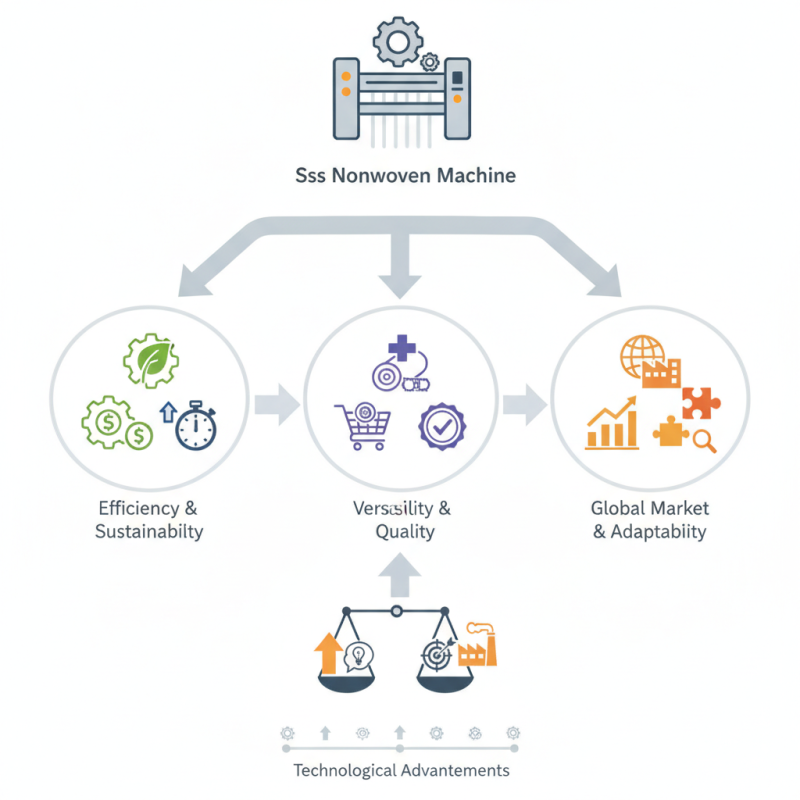
In the rapidly evolving textile industry, the Sss Nonwoven Machine stands out as a game changer. Expert John Smith, a well-known figure in nonwoven technology, once stated, "The Sss Nonwoven Machine has redefined efficiency and sustainability." This machine offers various benefits that appeal to global buyers looking to enhance their production processes.
The Sss Nonwoven Machine is designed for versatility and quality. Its unique features enable manufacturers to produce a wide range of nonwoven products, from medical materials to consumer goods. This flexibility is crucial in a market driven by changing consumer demands. However, potential buyers must weigh the machine's benefits against their production goals.
While the advantages are significant, investment in a Sss Nonwoven Machine requires thorough consideration. Companies need to assess their specific needs and ensure the machine aligns with their operational capabilities. Experts recommend that buyers stay informed about advancements in this technology to make the best choices.
SSS nonwoven machines play a crucial role in various industries. They are designed to produce lightweight and durable nonwoven fabrics. This technology is increasingly adopted globally due to its efficiency and versatility. These machines use a combination of processes like spunbond, meltblown, and needlepunching. Each method has its unique contribution to the fabric's final properties.
The functionality of SSS nonwoven machines is fascinating. They are capable of producing fabrics in diverse patterns and strengths. Some offer adjustable settings for thickness and texture. This adaptability makes them suitable for applications in hygiene products, geotextiles, and automotive sectors. However, there are challenges. Maintenance can be complex and requires skilled operators. Understanding the machine’s capabilities is essential to maximize output.
Adopting SSS technology may seem straightforward, but it requires careful planning. Ensuring a seamless production line is vital for meeting demand. Manufacturers often face issues like material waste and efficiency drops. Continuous learning and adaptation are necessary. As the industry evolves, so do the needs for training and operational improvements.
SSS nonwoven machines present numerous advantages for global buyers. One of the primary benefits is their efficiency in production. According to a recent industry report, these machines can increase output by up to 30% compared to traditional methods. This efficiency is critical in a market where demand for nonwoven fabrics continues to rise, with a projected growth rate of 6.5% annually.
Another key advantage is versatility. SSS machines can produce a variety of fabric weights and types. This flexibility allows manufacturers to cater to diverse applications, from medical to automotive. A survey indicated that over 70% of manufacturers noted increased adaptability as a crucial factor in their machine choice.
Tips for buyers include assessing the total ownership cost. It's essential to consider maintenance and operational costs as part of the evaluation process. Training staff on machine operation can also curtail downtime, ensuring smooth production lines. Moreover, some manufacturers may overstate their machine capabilities. Always demand proof of performance before investing. Careful vetting is paramount to avoid disappointing outcomes down the line.
The production of SSS nonwoven fabric presents significant cost efficiency and sustainability advantages. Manufacturers can reduce raw material costs while maintaining high quality standards. This lower expense translates into affordable products for consumers. In an era where every penny counts, efficient production processes are crucial. Innovations in technology are enabling streamlined operations, which can lead to waste reduction.
Sustainability is another critical aspect of SSS nonwoven fabric. Many nonwovens are made from recyclable or biodegradable materials. This reduces the environmental footprint significantly. However, there is room for improvement. Not all production methods prioritize environmental concerns. The industry must constantly evaluate and adapt practices to promote greener solutions.
Investing in energy-efficient machinery is essential for manufacturers aiming to enhance sustainability. These machines often consume less power and produce less waste. However, initial costs can be a barrier. Many manufacturers hesitate, fearing a decrease in short-term profits. Balancing immediate financial concerns with long-term gains is not easy, but it’s necessary for sustainable growth.
The market for SSS nonwoven machines is evolving rapidly. Demand is influenced by various trends in sustainability and hygiene. As more consumers prioritize eco-friendly products, manufacturers seek efficient production methods. SSS nonwoven technology shows promise in addressing these demands. It offers versatility in materials and applications.
Additionally, the global pandemic heightened the focus on hygiene and safety. This shift made SSS nonwoven machines essential in producing personal protective equipment. As health concerns persist, the demand for high-quality, reliable nonwoven products remains strong. Companies are urged to invest in advanced machinery to stay competitive.
However, some challenges need reflection. The initial investment in SSS nonwoven machines can be significant. Not all companies may see immediate returns. Frequent technology updates and training for staff are also necessary. Striking a balance between cost and quality is crucial for long-term success.
When selecting SSS nonwoven machines, buyers should focus on several key factors. These machines are versatile, producing layers of spunbond, spunlace, and carded nonwoven fabrics. According to a 2022 market report, the nonwoven fabric industry is projected to reach $50 billion by 2026, with demand driven by hygiene, medical, and automotive sectors. Understanding the specific needs of your application is crucial. Not all machines are created equal; some are optimized for speed, while others excel in precision.
Buyers must also consider the machine's efficiency and energy consumption. Data from the Nonwoven Institute indicates that energy-efficient machines can reduce costs by up to 30%. Additionally, the availability of spare parts and technical support can impact long-term production. Some companies struggle with downtime due to inadequate maintenance support. Research shows that investing in reliable machines can lead to fewer disruptions.
Finally, it's essential to weigh investment costs against potential returns. An ordinary machine might be cheaper upfront but could lead to higher operational costs. Evaluating your budget while considering the quality of output is vital. Frequent assessments of production needs can help ensure alignment with industry trends.
| Dimension | Details |
|---|---|
| Production Capacity | Up to 3000 kg per hour |
| Material Compatibility | Polypropylene, Polyester, and other synthetic fibers |
| Technology Level | Advanced automation with touch screen interface |
| Energy Efficiency | Up to 30% less energy consumption compared to traditional machines |
| Maintenance Requirements | Low maintenance with easy access to parts |
| Customization Options | Various configurations available for different applications |
| Certification Standards | ISO 9001 and CE certified |
: Their efficiency can increase production output by up to 30%.
It allows for the production of various fabric weights and types for different applications.
Evaluate total ownership costs, including maintenance and operational expenses.
Training staff on machine operation can significantly reduce downtime.
Always ask for proof of performance to avoid overstatements by manufacturers.
Trends in sustainability and hygiene are driving the need for efficient production methods.
It increased the demand for machines producing personal protective equipment.
Yes, high initial investments and the need for ongoing technology updates can be challenging.
Striking a balance is crucial for achieving long-term success in production.
Not all companies may see immediate returns, which requires careful consideration.
The "Sss Nonwoven Machine" provides significant advantages for global buyers, revolutionizing the nonwoven fabric production process. These machines offer enhanced functionality, enabling efficient and high-quality output tailored to various applications. One of the key benefits of the Sss Nonwoven Machine is its cost efficiency, which can lead to substantial savings in production costs while promoting sustainability through reduced material waste and energy consumption.
Market trends indicate an increasing demand for Sss Nonwoven Machines, driven by the growing applications of nonwoven fabrics in industries like healthcare, hygiene, and automotive. When selecting a machine, buyers should consider factors such as production capacity, technological features, and support services to ensure they make an informed investment that aligns with their operational needs and sustainability goals.

HG NONWOVEN